Nothingness

Text and photography by Flemming Bo Jensen

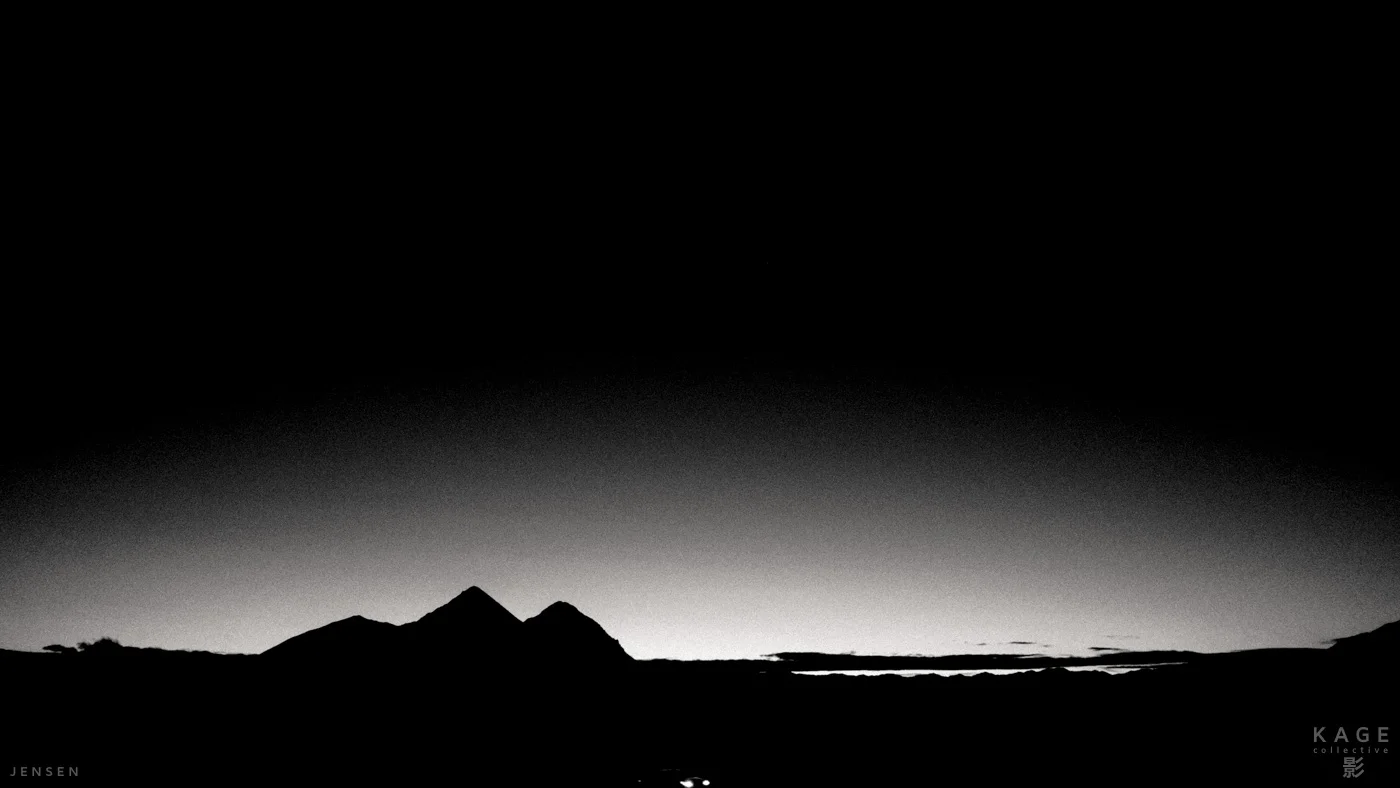
"Tired. The sort of tired sleep cannot fix. Broken. Everything I know is wrong. Must keep driving".

My words from half a decade ago. The road promised new experiences at the time. Empty promises perhaps, but it was something at a time when all hope was lost. A promise of a better tomorrow? An illusion? I had to keep moving. When I stopped the shadows caught me.  

I stare at the edge. I know this place. I am visiting an old friend. I called it home for decades. Part of me never came back. Part of me is still out there wandering, freefalling into insanity. 


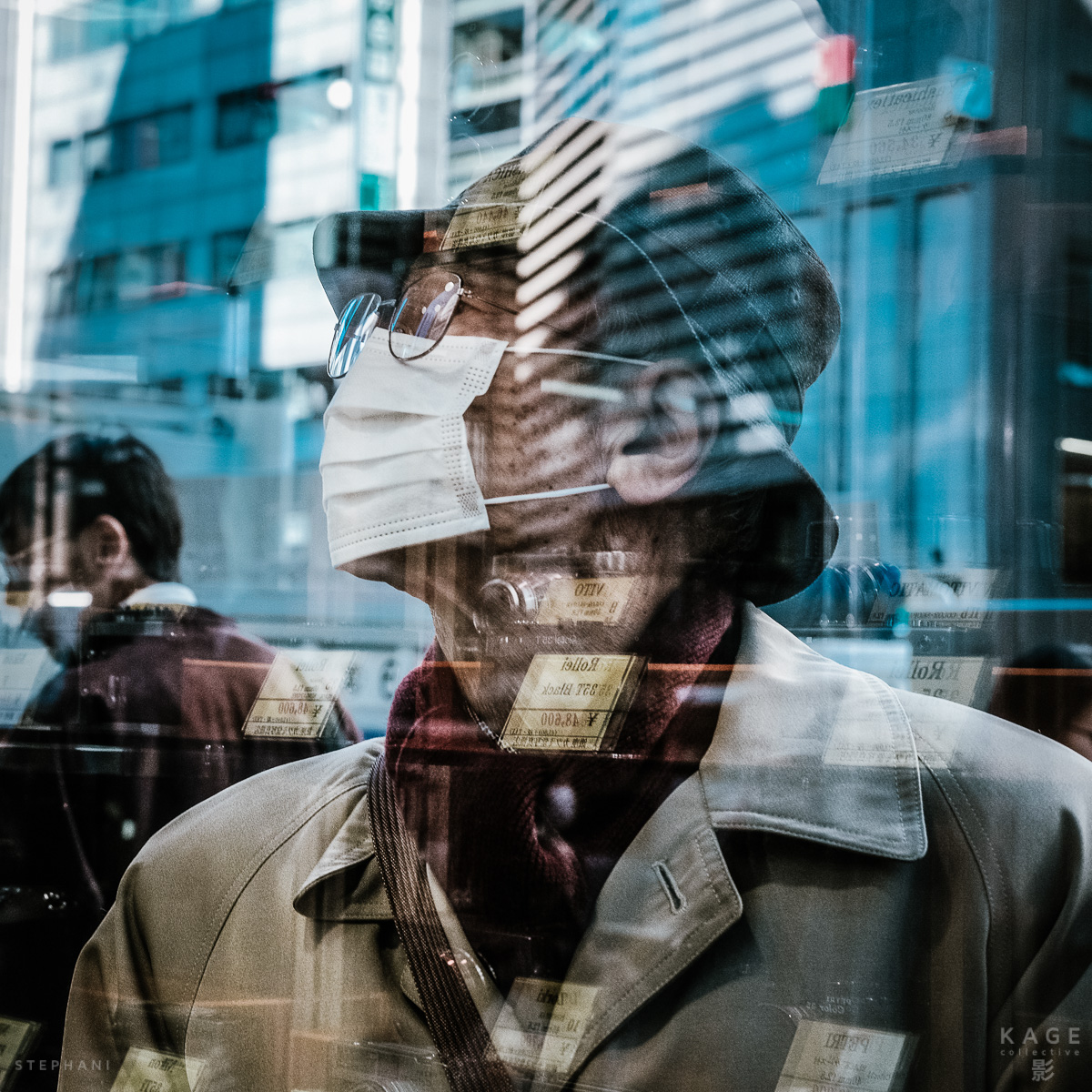
Gone ... Fishing

TEXT AND PHOTOGRAPHY BY BERT STEPHANI

Lisbon, Portugal

Only half a century ago, over seven hundred carpenters, engineers, electricians, boiler makers, painters and other workers, serviced a fleet of twenty five fishing vessels for the Companhia Portuguesa de Pescas. Worldwide competition and technological evolutions made the company close it’s doors in the eighties. Less than a hundred years after the company was founded, all that is left is beautiful decay and some former employees who guard the spirit of this place with nothing but their weathered silent faces and their fishing rods. 


Essentielles

Text and photography by Vincent Baldensperger

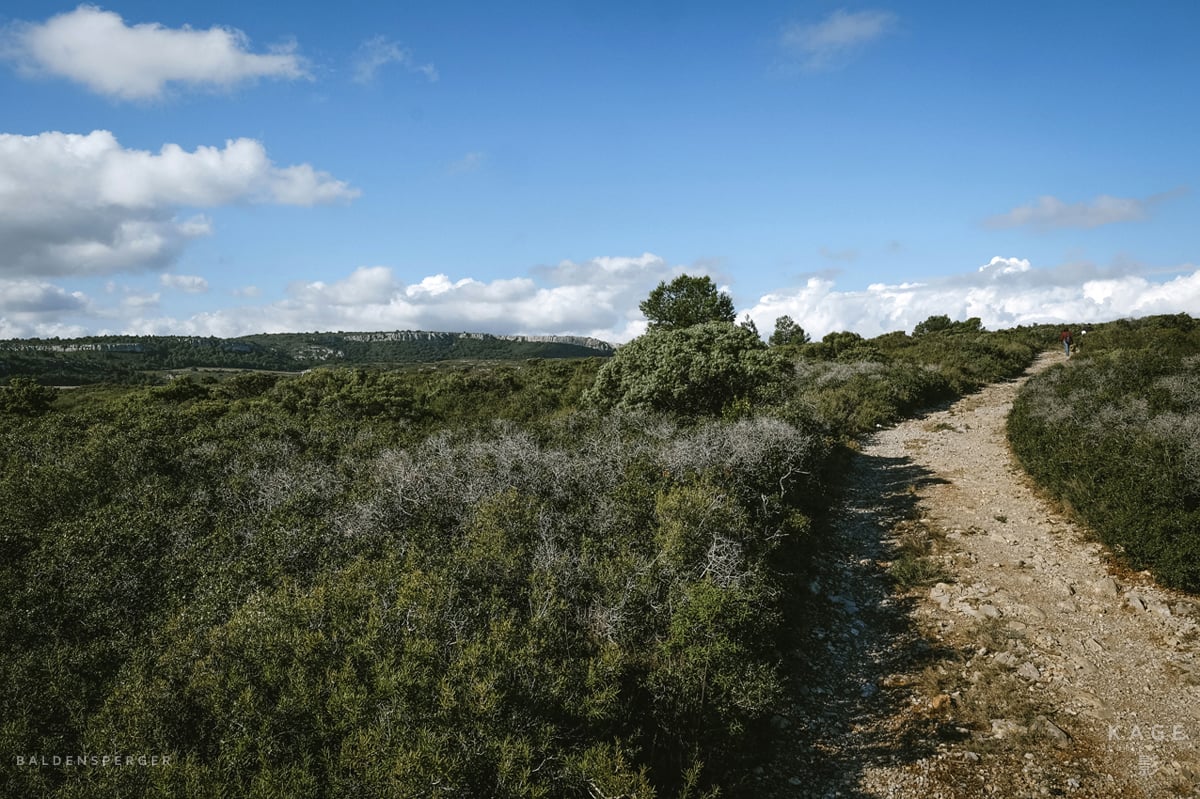
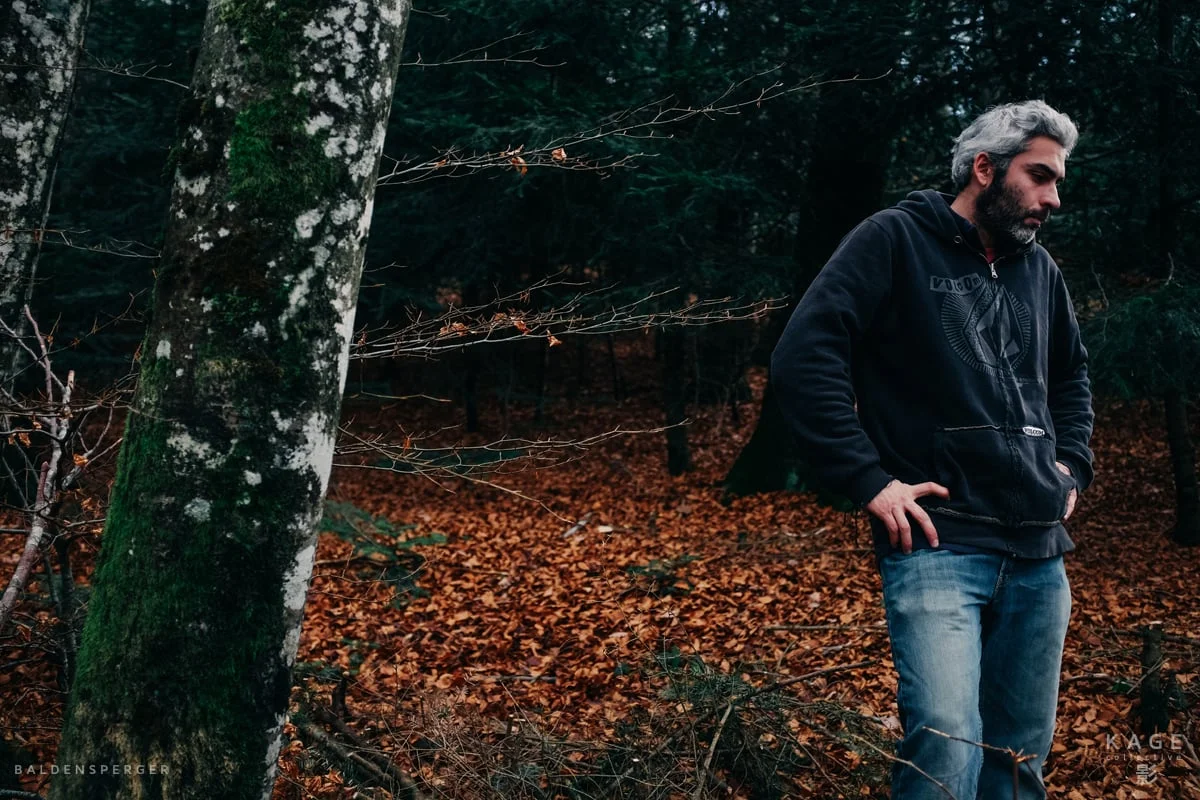
Clémence et Julien partagent la même passion, la Nature. Ici et là, de la Montagne Noire aux massifs de la Corse, elle distille ses parfums selon les saisons et offre ses richesses à ces deux amoureux des grands espaces. Cueillette sauvage, distillation traditionnelle, leur savoir-faire est précieux, tout autant que les élixirs rares recueillis tout au long de l'année.

Automne sur le massif de La Clape, souffle parfumé d'aromates sauvages, la récolte artisanale de romarin débute sous un soleil toujours estival.

Clémence and Julien share a passion: Nature. Here and there, from the Black Mountain to the summits of Corsica she distills her fragrances with each passing season, offering her riches to these lovers of the wide-open spaces. Wild picking, traditional distillment, their knowledge is as precious as the rare elixirs harvested throughout the year.

Autumn on La Clape, a wind laden with wild scents, the harvest of rosemary begins under a sun still hinting at summer.

Décembre 2015, solstice, en plein cœur de la Montagne Noire, chacun recueille avec adresse quelques kilos de sapin blanc et profite pendant quelques heures de délicates senteurs agrumes et boisées...

 December 2015. Solstice in the heart of the Black Mountain. Each collects a few kilos of white pine, enjoys a few hours of citrus and woodsy fragrances...

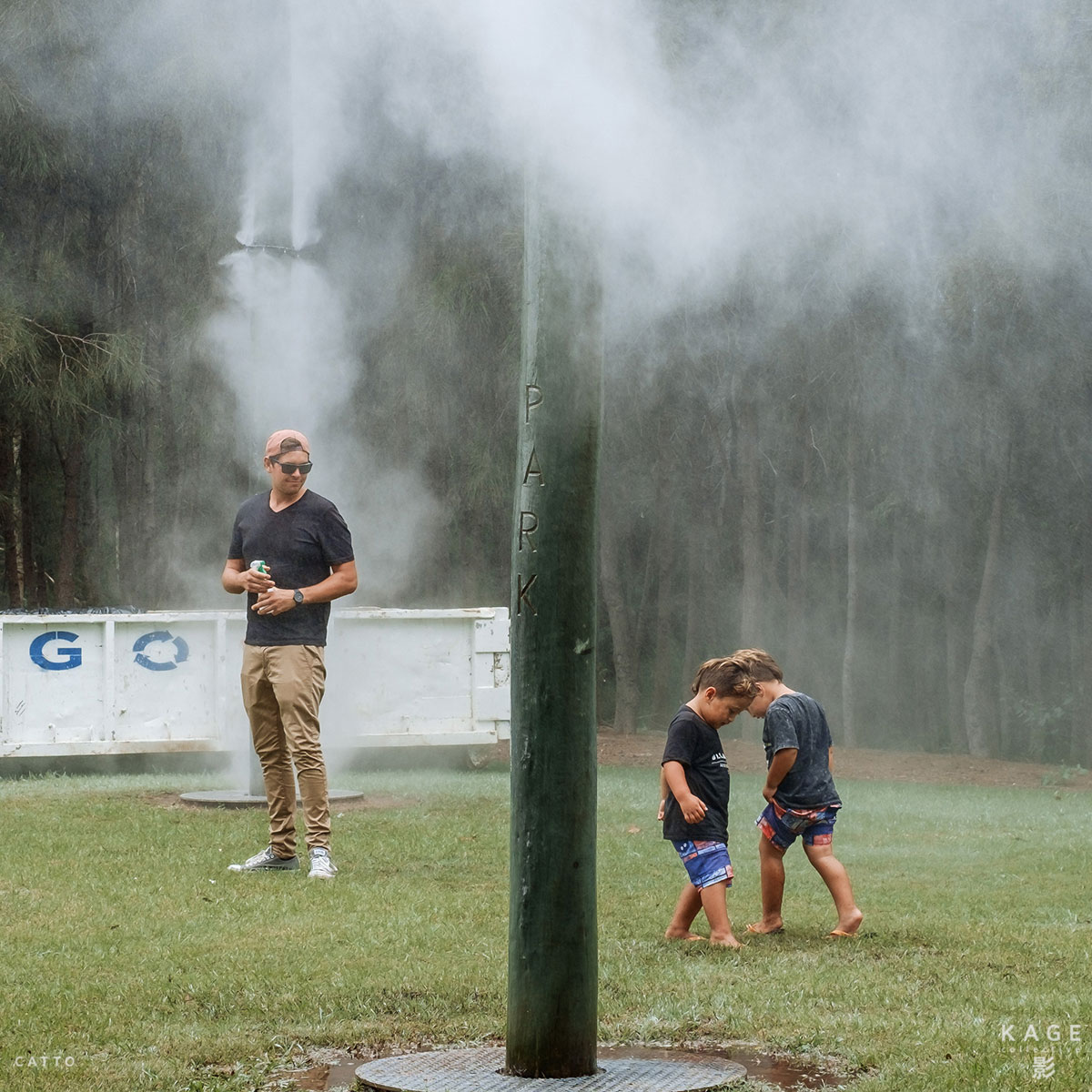
Waitangi Day, Sydney

Waitangi Day, Sydney

Waitangi Day, 6 February, celebrates the anniversary of the signing of the Treaty of Waitangi between the Crown and 500 Māori chiefs in 1840, which - depending on the translation - allowed the English to remain in Aotearoa and act as administrators for the new country, or else handed sovereignty of the islands to Queen Victoria. The political history of New Zealand since then has revolved around the difference between those two versions of the one agreement.

So when I heard about the celebrations here in Sydney, I wondered what it would be like to celebrate this national day in another country - Australia - with a different history. And I wondered how the Tangata Whenua - 'the people of the land' - fit in, and celebrated their culture, on someone else's turf...

Humanity

Text and photography by Kevin Mullins

My role as a member of Kage is slightly different to the others.  I'm a storyteller, sure, but almost all of my commercial storytelling comes within the framework of a wedding celebration.

Many of my contemporaries in this [wedding] industry place total importance, and perhaps rightly so, on technical skill and their ambition is driven by the perfect picture.

I'm less worried by all of that. 
Sure, I understand Light, Composition and Moment make an award winning picture.
Sure, I understand a crop at a knee can add ambiguity to a frame.
Sure, I understand even a minuscule of blown out highlight will guarantee an image will never win an award.

I've had several epiphanies in my short life as a photographer; the epiphany that I don't need large cameras being one of the most prominent.

However, a long time ago I had another epiphany (of sorts).  To a certain extent my work has always been about the non-technical.  Its about humanity and humanities constituent parts; human interaction, love, laughter, silent contact, emotion......love.....love.....humanity.

Humanity
hjʊˈmanɪti

the quality of being humane; benevolence.
"he praised them for their standards of humanity and care"
synonyms:    compassion, brotherly love, fellow feeling, humaneness, kindness, kind-heartedness, consideration, understanding, sympathy, tolerance, goodness, good-heartedness, gentleness, leniency, mercy, mercifulness, pity, tenderness, benevolence, charity, generosity, magnanimity

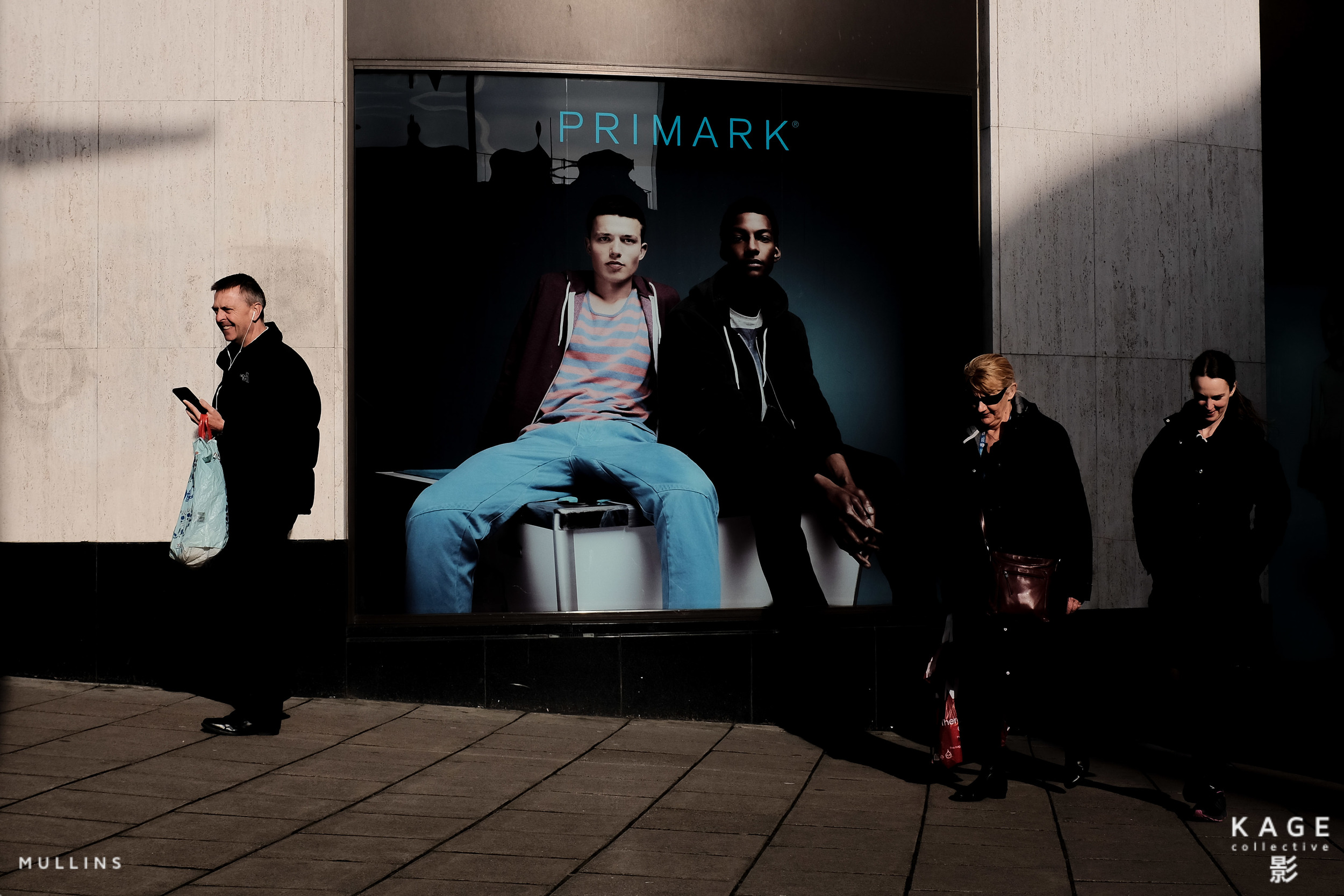
All of the images below have been assaulted by other photographers and judges, generally based on their technical mis-merits (and they are correct). They have each failed catastrophically in high level photographic competitions.

The truth is they are not technically great, but they were never going to be.  If I was to stage these moments well, then, these moments would never have occurred. How sad would that be?

Light, composition, moment? 
Moment first, for me, at least.

First Impressions of the Fujifilm X70

Text and photography by Bert Stephani

It was over two years ago, when some people at Fujifilm Japan told me about the idea to make a camera that would essentially be the smaller brother of the X100-series. I must admit that I wasn’t really sold on the idea of such a camera at first. It was only a couple of weeks ago, when I got a little play with a prototype X70 in Japan, that it started to make sense. For the last few days I have been playing with a production version and I will do a complete review after my upcoming trip to Cuba. For now, I just want to give you my first impressions. 

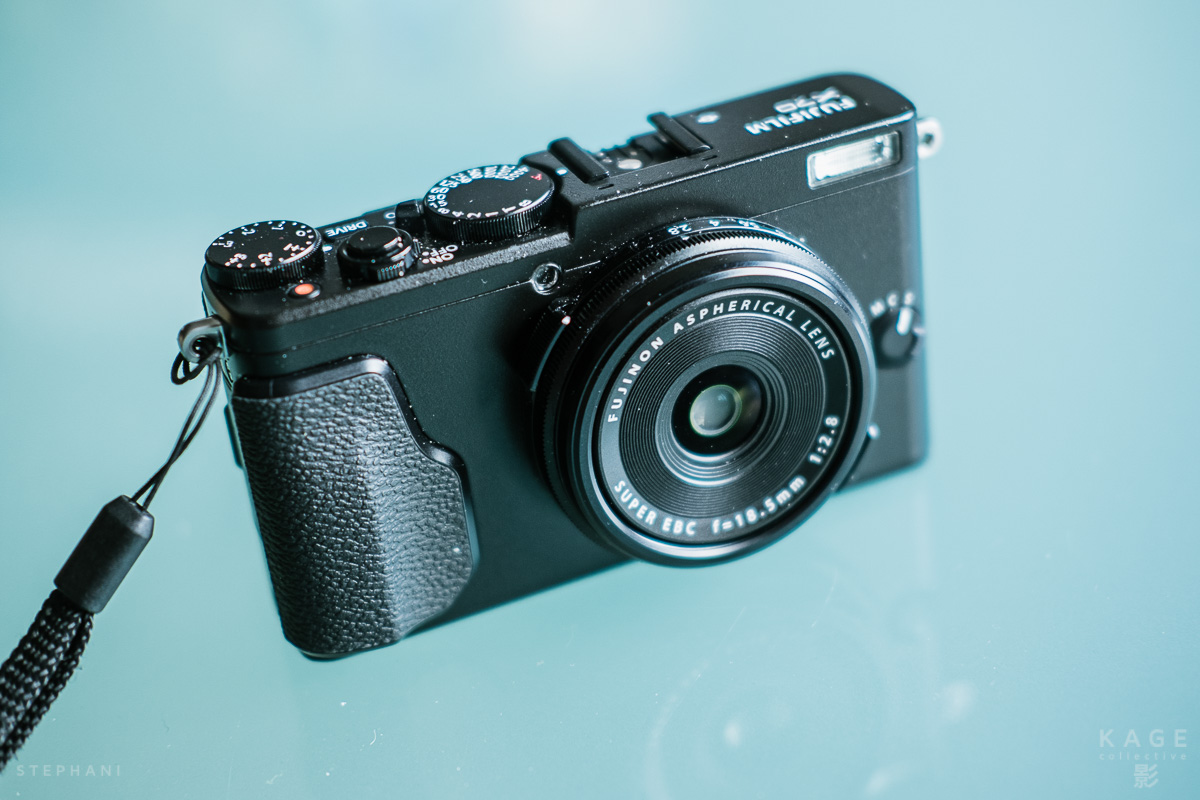
The very first thing that came to my mind when I held the X70 in my hand was: “this camera will fit in my jeans pocket” and that’s exactly the reason why I immediately pre-ordered one. Until now the X100T and the X30 were my always-with-me-cameras. The X100T was just a touch too big for the job and the X30 didn’t have the excellent large X-Trans sensor. The X70 is not that much smaller than the X100T but unless you like skinny jeans, it fits in a decent size trousers pocket and it has the big sensor. 

The X70 definitely shares its DNA with the X100T. As far as I know it has the same sensor and feature set as it’s big brother but it’s considerably smaller and a lot cheaper. This of course means that some compromises had to be made: the X70 has no viewfinder, the build quality is not as refined as on the premium X100T and the lens is a stop slower at f/2.8 (and a bit wider with it’s 28mm equivalent focal length). To me, none of these are true deal breakers, especially for a compact always-with-me-camera. Just know that it’s not an X100T. 

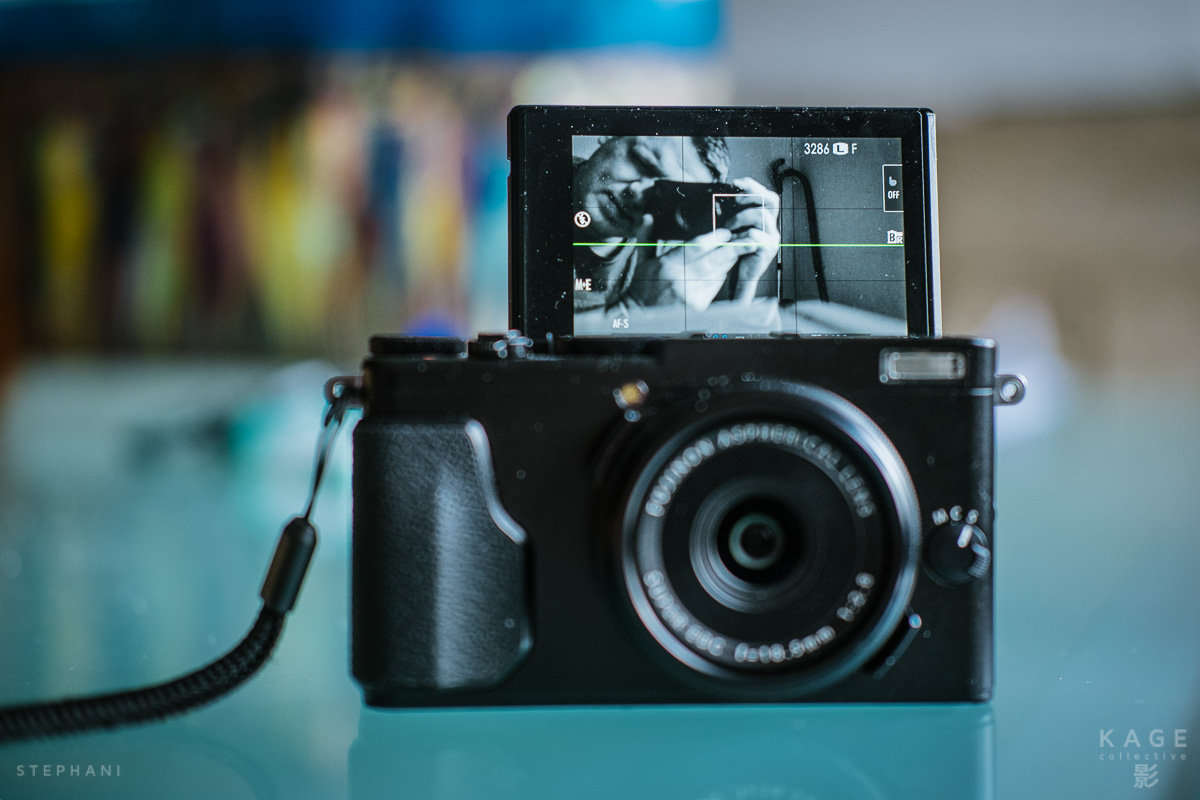
The articulating screen is a great feature of the X70. It’s ideal for shooting inconspicuously from all kinds of creative angles. It’s also the first X-camera with a touch screen. You can focus, shoot or both with a tap on the screen or you can just turn off the touch function altogether. In playback mode you can swipe through images and pinch to zoom. Currently that’s all you can do with the touch screen but I imagine more touch features could be added through firmware updates. 

The screen flips up completely for selfies with your ladybug daughter

The screen flips up completely for selfies with your ladybug daughter

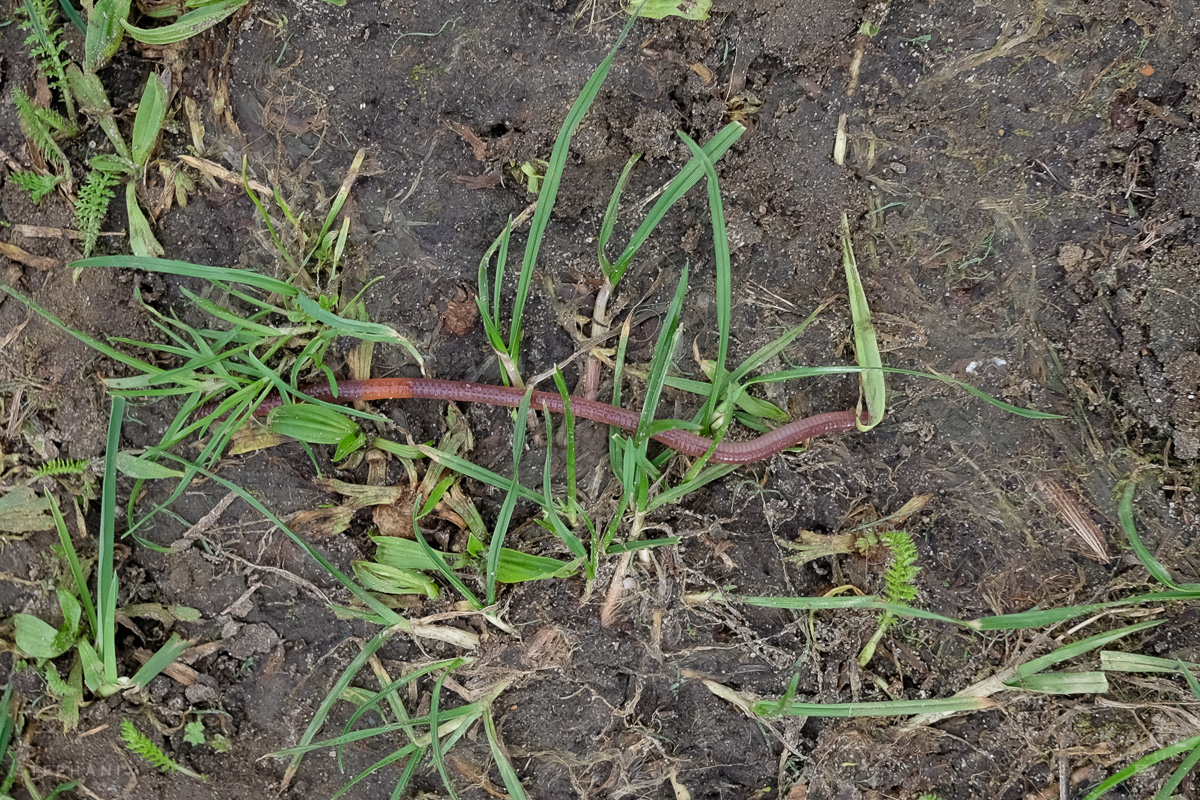
The X70 has all the manual and advanced functions of a real photographer's camera but there’s also an auto-switch on the top-plate that turns the camera into a foolproof snapshot machine. Not a function that serious photographers will use a lot maybe, but now at least you can hand the camera over to non-photographer friends and family members. Now my eight year old daughter can take artsy pictures of earthworms.

So far, I’ve been having a lot of fun with the X70. I’ll be giving it a proper workout in Cuba in a couple of days and I’ll report back after the trip. In the gallery bellow you’ll find some random shots with the X70.

Book Review | Magnum Contact Sheets

Review and photography by Derek Clark

I have a bit of an addiction to photography books. They take very little effort to read and the amount of knowledge you can get from them is absolutely vital if you want to grow as a photographer. The biggest problem with photography books though, is not to allow them to sit on a shelf and gather dust after you first consume them. In fact you will probably gain more from them the second, third, forth, fifth time...etc. You see, these books are not DVD movies that get watched once and then sit there with no purpose other than to take up space. They are our largest source of learning and a very underestimated part in our growth. 

I have a lot of photography books, but one of the most valuable for any photographer, especially documentary photographers, is Magnum Contact Sheets. I almost feel like apologizing that this first Kage book review might be a little obvious, but I doubt if there is a better, more encyclopedic book out there that allows us inside the minds of so many great documentary photographers than Magnum Contact Sheets.

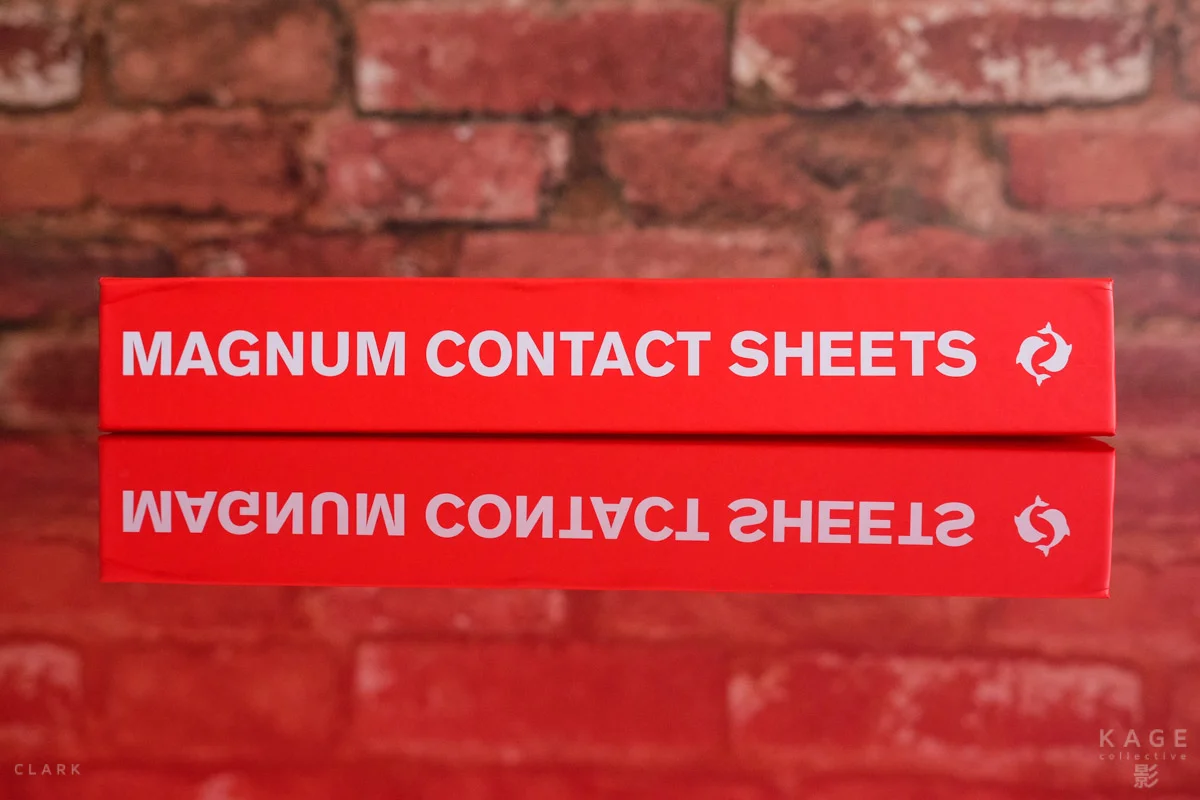
The original version of this book was an oversized and costly affair that came in with a £90 price tag here in the UK. That might be a little expensive for a book, but it was still worth it in my opinion. But the reason I never bought that version was that each time I saw it at Waterstones (bookshop), the book was always damaged in some way. Probably because it was so large and awkward too handle. But hoorah, a smaller version became available and at half the price. It's this version that you see in the photos here.

So what is Magnum Contact Sheets? Basically it's all the stuff you wouldn't normally get to see from the top Magnum photographers. The shots they take before and after that single frame that the world knows and loves. You know, the reason you think their pictures are so great and yours are as much use as an arse full of boiled snow. It shows that The Decisive Moment (as coined by Henri Cartier Bresson, who is also included in this book), while valid and at times crucial, can be a bit misleading and not really that helpful to aspiring photographers. As you will see inside the book, Bresson did not wait for that one decisive moment to present itself to his 50mm Leica lens before pressing the shutter, but worked the scene and took many shots before capturing one that he felt was good enough to present to the world. He would then continue to shoot more pictures, possibly only knowing which one was the decisive moment after looking at the contact sheet?

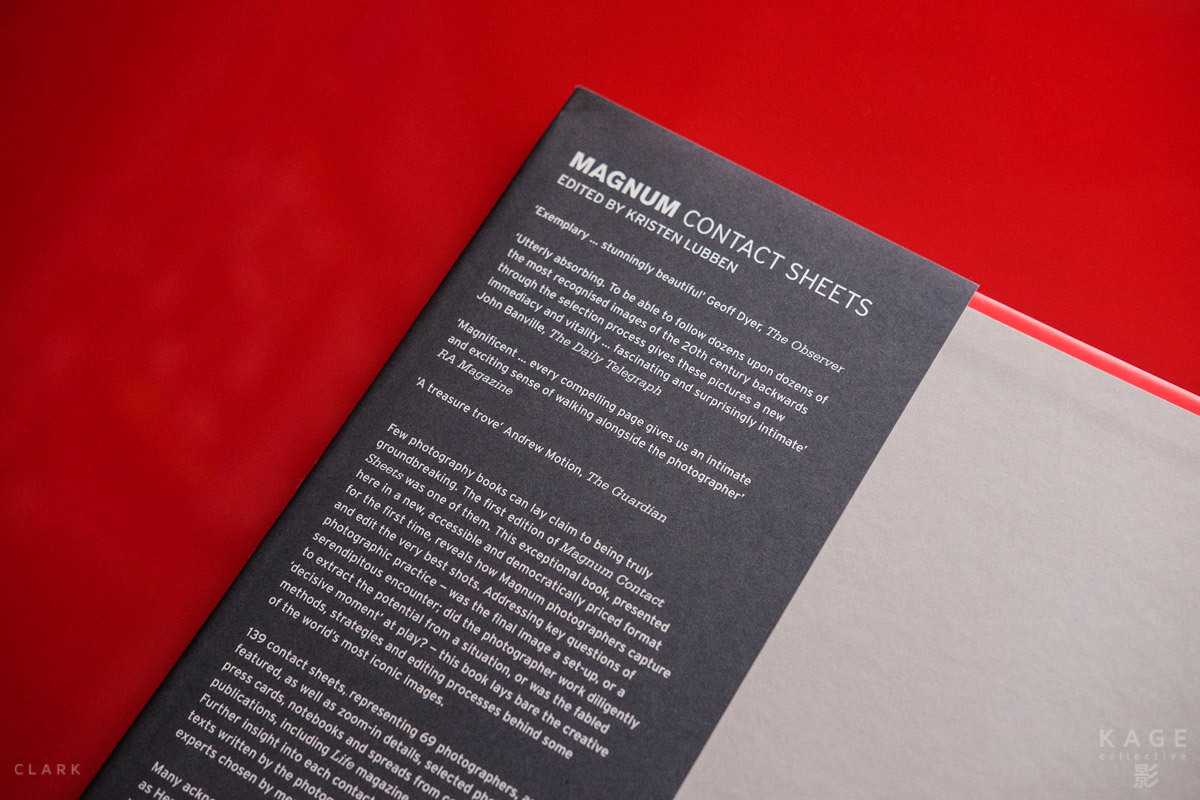
The book is 30cm tall x 25cm wide x 5cm thick. It has 525 pages and according to the dust jacket there are 446 illustrations, of which 240 are in colour. The dust jacket is a plain grey paper affair that is a bit flimsy and the only part of the book that doesn't live up to expectation. It looks fine, but the paper is a bit too thin and easily ripped or creased, which is usually why you will find this book damaged in bookstores. It's also the reason I bought it from Amazon and had it gift wrapped. Not because I'm a sad case that sends presents to myself, but to make sure the dust jacket would not be damaged in transit. But don't be put off by this minor detail, because every other aspect of the book is excellent. Remove the dust jacket and you have a rather surprising bright red hard cover with wax pencil design to match the contact sheet theme.

Magnum have a history in great print quality across their books and Contact Sheets is no exception. The black and white pictures have rich contrast with deep blacks and bright whites. The pages have more of a sheen than a gloss finish and that's fine by me. The only other Magnum book I can think of having better print quality would be Magnum Revolution, which is outstanding and also highly recommended.

So which photographers would you expect to find inside? Well there's Henri Cartier-Bresson, Robert Capa, Elliott Erwitt, Cornell Capa, Eve Arnold, Bruce Davidson, Philip Jones Griffiths, Josef Koudelka, Alex Web, Abbas, Larry Towell, Trent Parke and a lot lot more too. There are serious subject matters from 911 to Vietnam, Martin Luther King to JFK. There's also some of the more humorous pictures here too, including Elliott Erwitt's  Bulldogs 

The text that accompanies the contact sheets is equally fascinating and is written by the photographers. Josef Koudelka tells how his girlfriend called him on the 21st of August 1968 to say that the Russian troops were entering Prague. He took his two cameras, one with a 25mm lens and the other with a 35mm, both of which were loaded with motion picture film because it was cheaper, but that meant that the contact sheets had to be numbered by hand after printing. Five photos from that one contact sheet were used for Koudelka's book Invasion Prague 68. Some were also featured in a more recent book called Nationality Unknown, a book that I own and also highly recommend.

Thomas Hoepker talking about his iconic picture of Muhammad Ali's fist close to the camera with his face thrown out of focus, says "At the time we had a simple rule: if you meet an interesting person, just stay with him/her... until he/she throws you out. He goes on to tell how Ali walked over to him standing in the shadow. Ali throws a left, right, left punch into his wide angle lens. Hoepker thinks it's another missed opportunity because of the low light and trying to manually focus on those fast moving fists. But years later that one grainy shot was used by magazines and books, hung huge above museums and sells in countless photo auctions.

The book includes black and white contact sheets, colour and even some with colour slides. We see the markings made on the contact sheets as the photographers choose the frames that work and reject the ones that don't. We of course see the best shot highlighted and even see some of the notes hand written on the back of sheets.

I have many photography books in my collection and I did plan on reviewing something a little more obscure that would make me look all cool, suave and sophisticated (yes I know). But Contact Sheets kept sliding out seductively from the other books and I honestly can't think of another book that is more valuable and rich with content for the aspiring documentary photographer. This book is worth every penny and is definitely the gift that keeps on giving. Revisiting the book for this review has made me want to go back to the very beginning and slowly work my way through it once again. I hope this review has been helpful to you and if you don't already own this book, I think you should direct a few strong hints toward your significant other. The chances are, like me, you have enough gear and more gear probably won't improve your photography. But books will.
8XFEB16


OUR PERSONAL CHOICES THIS MONTH


Issue 001 - words from the editor

For over three years now KAGE Collective has been first and foremost a gathering of photographers: our public face—the stories and articles on this site—was always the tip of the iceberg, with much more going on beneath the surface than what was actually visible. From day one—and even more so in the last two years—we've stayed in touch with each other, shared thoughts and ideas on an almost daily basis. But recently we came to the realization that this private activity was lulling us into a false sense of accomplishment...as enriching as they were, all these conversations weren't necessarily translating into actual content.

As a photography collective, content should be our focus, always.

KAGE Editions has been a step in the right direction, with three books already under the label's belt. But last November we also began re-thinking our ways more profoundly, laying the foundations for a new approach based on a magazine-like monthly schedule, the results of which you're seeing here today, with what we're labelling our first issue.

A fixed deadline may seem odd and almost anachronistic in this day and age, when everything around us is constantly speeding by on a daily basis, but our project isn't about news or immediacy—while we're broadening the scope to include interviews and articles along with essays and stories, we remain committed to a slow and deliberate approach. We feel this is consistent with the new format we're adopting.

Instead of random updates, our entire homepage will now refresh with brand new content on the 15th of every month, just like magazines in a newsstand. And I won't be the only one at the helm: each of us will also take turns as editor. Over the next few months, as we settle in and add material, additional changes to the website will allow these monthly issues to be browsed easily as we move away from the chronological but flat presentation of the collective's work we've been using up to this point.

This is for you, our readers—and we're hoping you'll stick around for the ride—but it’s also for us: because it's a kick in the you-know-what. Fact is, life runs on deadlines or else procrastination takes hold, soon followed by apathy, regardless of intentions. So enough with the chatter...and on with the show.

I'll end with a few words about this first issue, all about Fujifilm’s new flagship camera: the X-Pro2. Five of us had the privilege of being part of a special X-Photographers project and have been using prototypes since last October—so we've shot several essays and written a unified review that looks at various aspects of this impressive update from our individual point of views. Also this month: Charlene Winfred has a chat with photographer Lynn Gail and Derek Clark visits Open Trenches.

If you're reading this on January 15th 2016, Bert Stephani and I are in Tokyo attending the 5 year X-Series anniversary and X-Pro2 launch event, most likely shooting our hearts out. I'll take a wild guess and say there's probably also a good dose of saké mixed in; more stories in the making.

So welcome to our new digs, we do hope you enjoy the view. And let's all hail 2016: our Year of Publishing.