On The Trail of Sub Bass

Photography & text by Flemming Bo Jensen

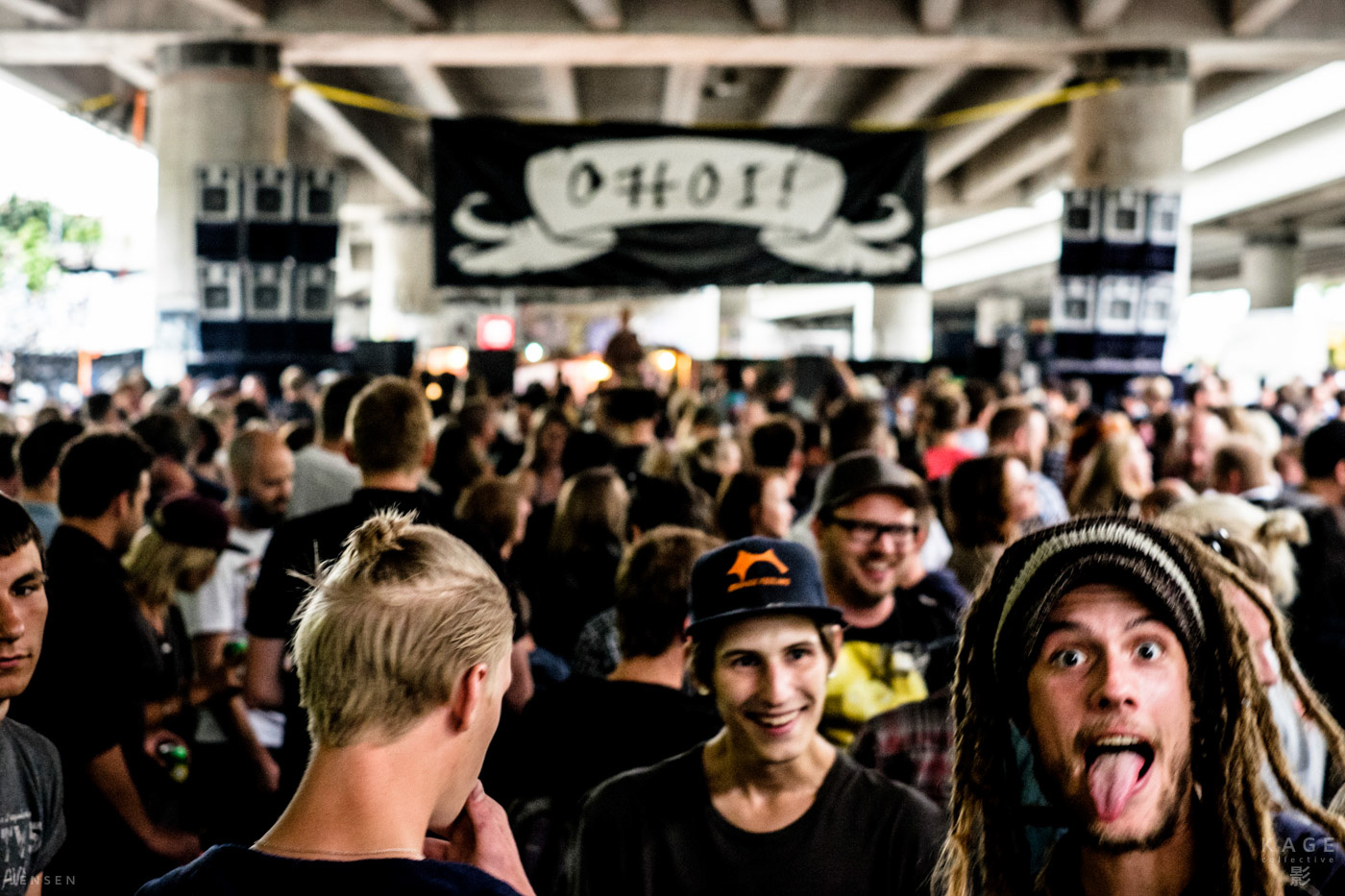
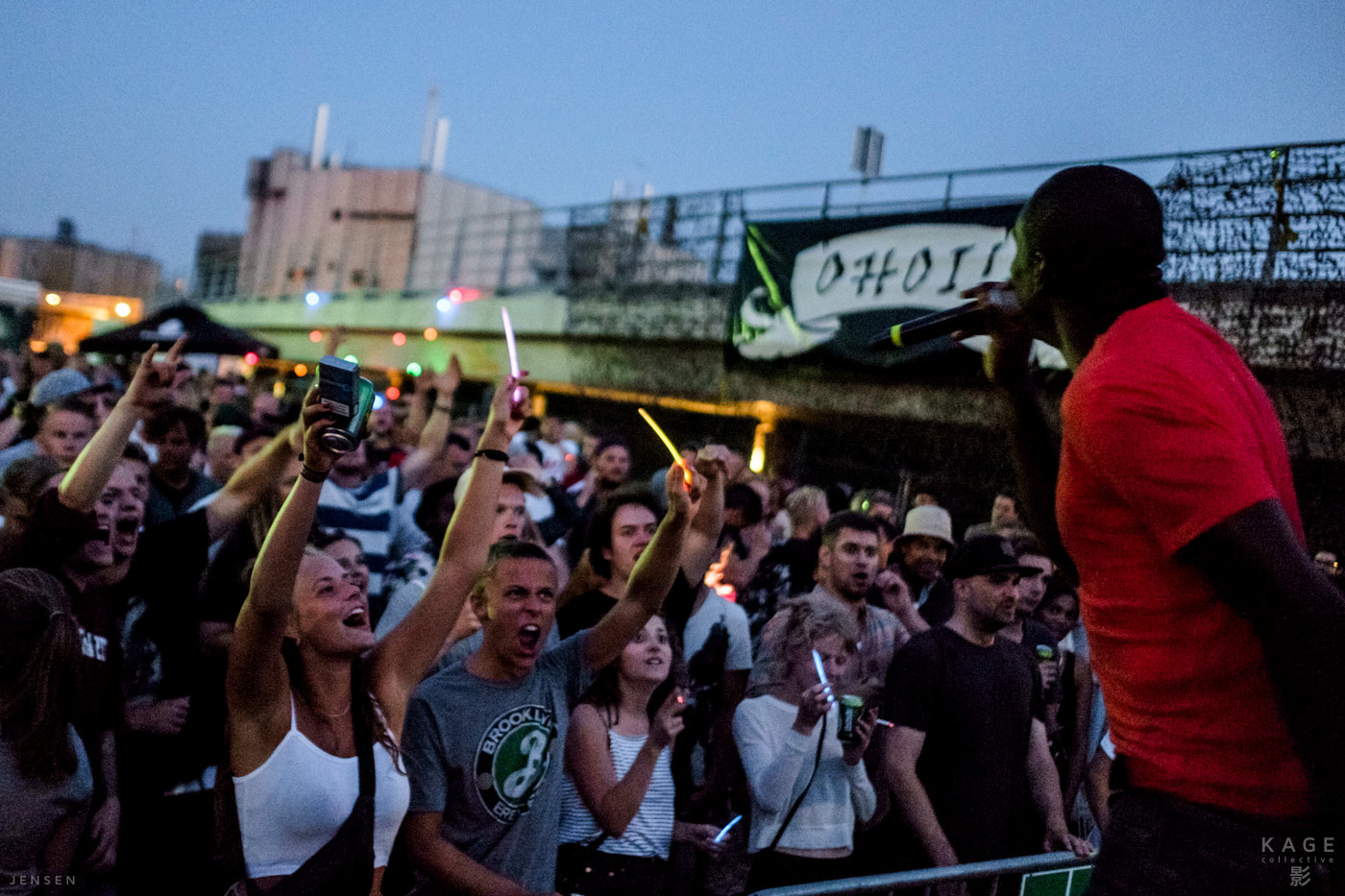
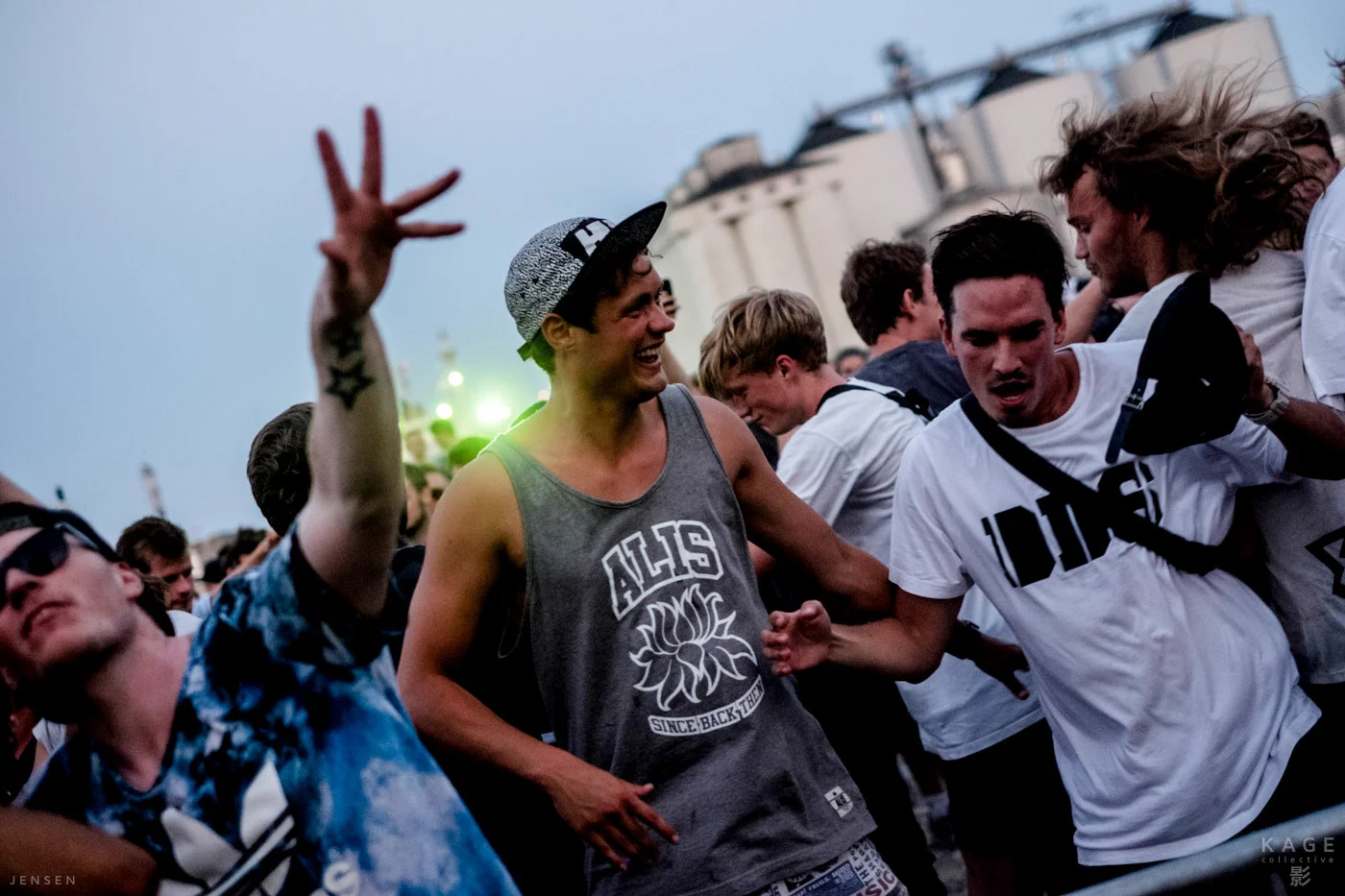
Every year thousands of ravers assemble under a highway overpass in Copenhagen. They are here to worship electronic beats organized by Ohoi! - Copenhagen’s original sound killers and bass pirates.

They call it ‘Bas Under Buen’ - Bass under the Arch. The event showcases Danish electronic artists with sub-bass as the common thread that threatens to awake the Kraken from the icy Nordic depths. The theme is music by the people for the people. The DJ is on street level with the crowd. There are no special lights. And everyone plays an equal amount of time. 

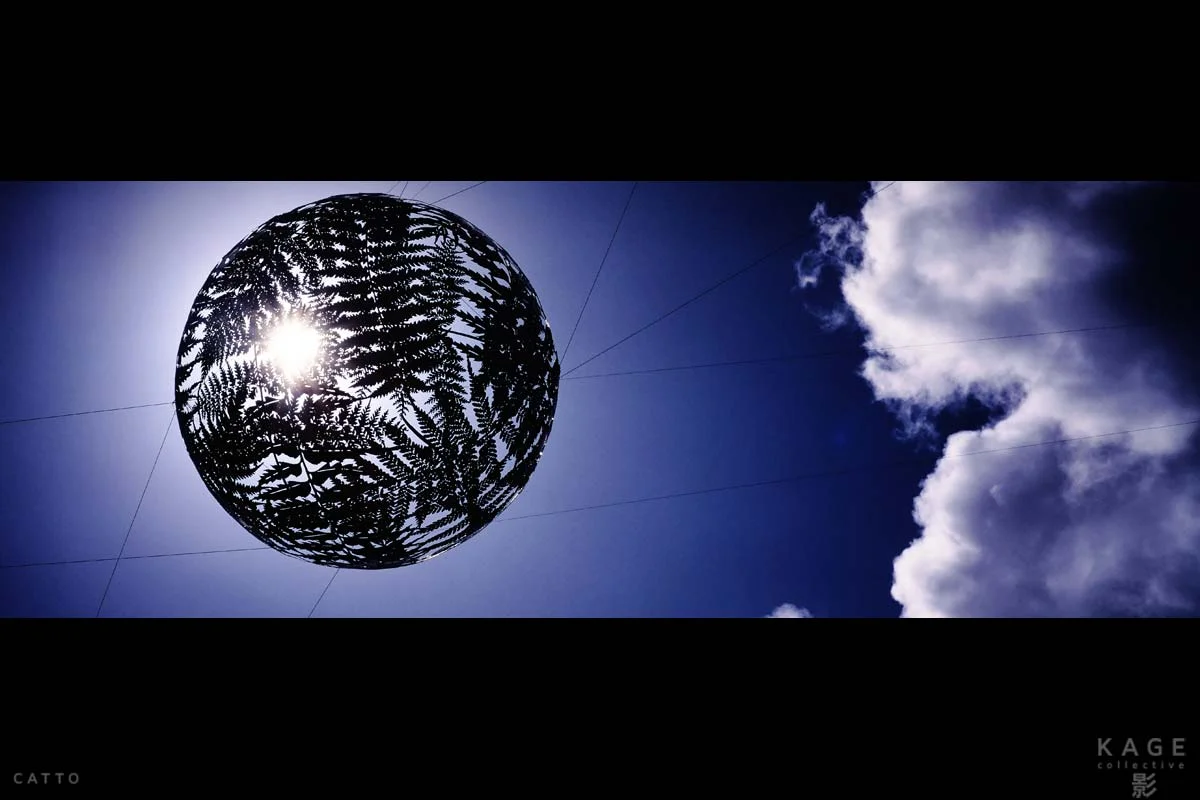
The Copenhagen event is a classic, but now it is just the opening. Now we travel to 3 other cities in Denmark, leaving behind a trail of low frequency induced mayhem. 

Behind The Scenes : Fashion Consciousness

BY DEREK CLARK

If you take a look in the Stories section of Kage, you will find an essay by me called Fashion Consciousness. That project came about in a rather unusual way, so I thought I would use Chronicle to give a little behind the scenes look into how I ended up shooting backstage at a fashion show.

Every couple of weeks I meet with two photographer friends (both called John) to put the world right and talk about photography—mainly because our other halves don't listen to us (!). John 1 asked if we'd be interested to shoot some pictures for the fashion department of one of the big colleges in Glasgow. There was no budget, but the deal was that we could shoot it any way we wanted with no outside interference. John 2 and I both saw it as an interesting opportunity, so we jumped in with both feet. Gaining access is the key to all documentary projects, so for me this was a way in to who knew what.

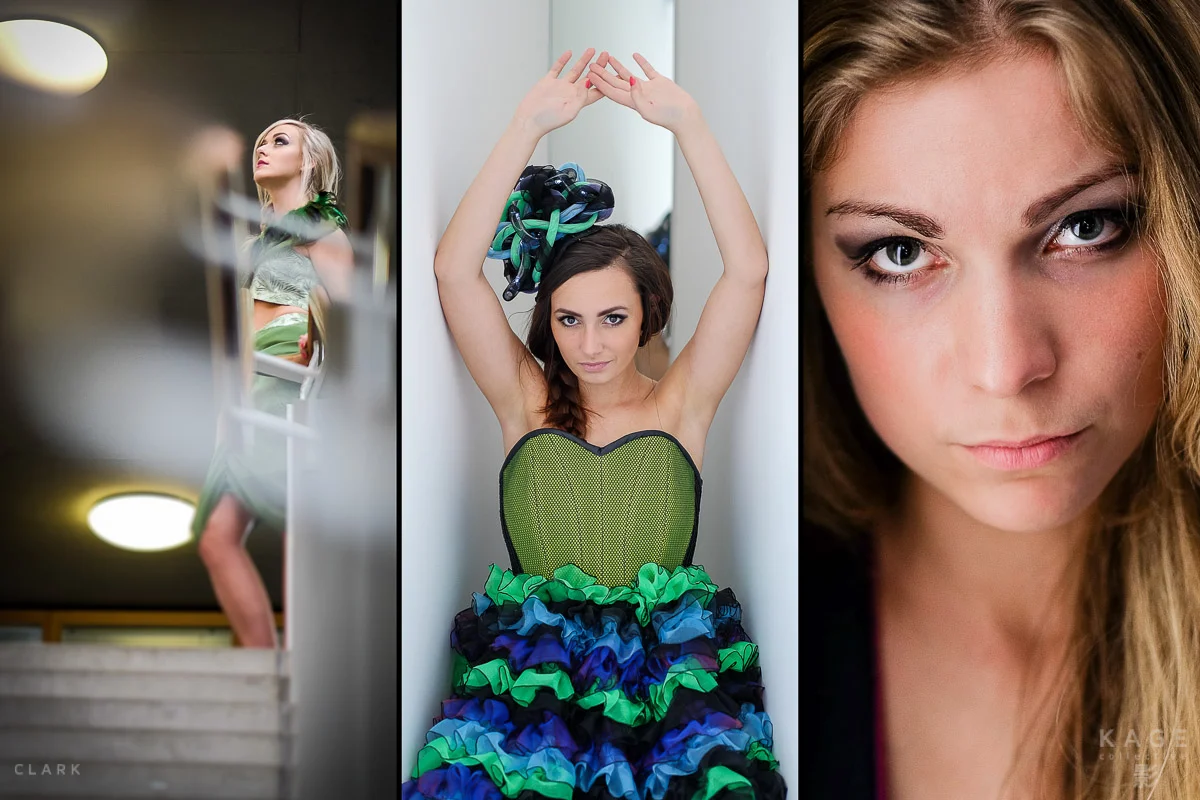
The first visit involved shooting models wearing clothes the fashion students had designed. These students are on their way to a career in the fashion industry, so the standard is pretty high. I would point out here that I'm no fashion guru, but we each chose a model and wandered off to wherever location we found interesting in the building, with the idea that we would come back together at some point and switch models (I think we were working with five girls that day). 

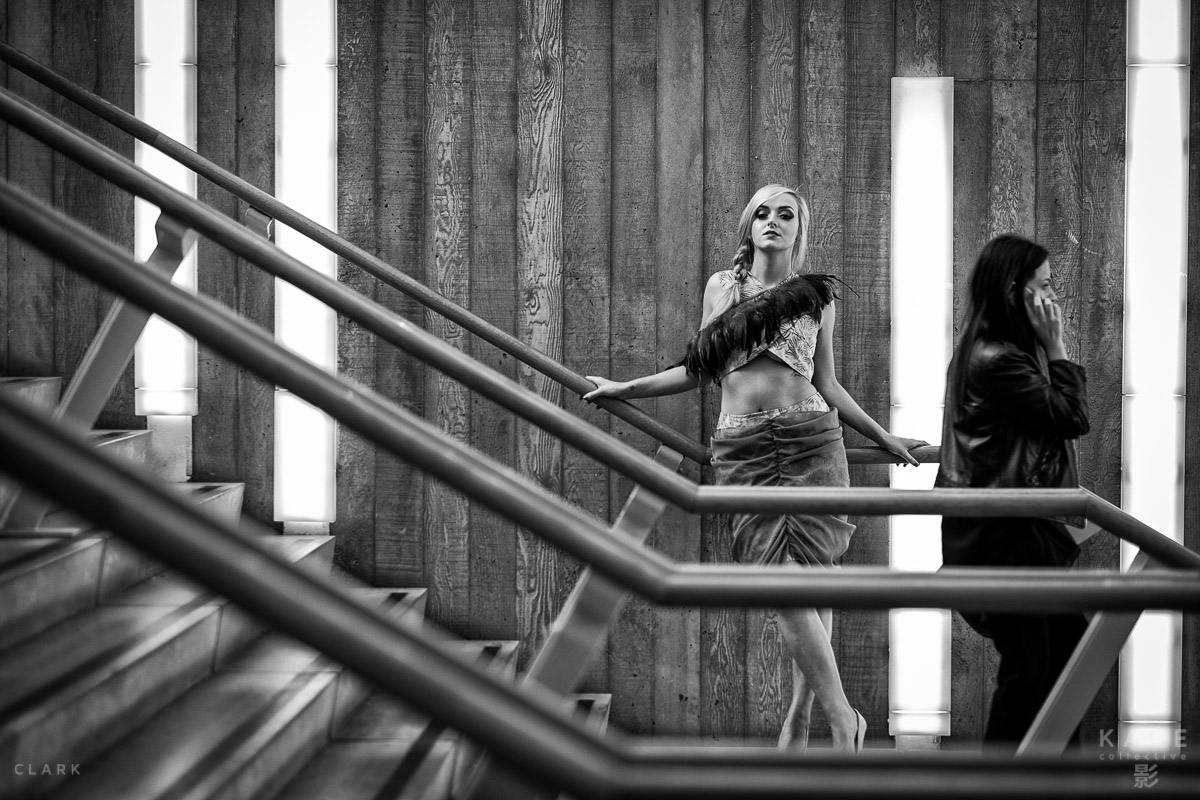
The college building was fairly new and the architecture was modern with lots of glass and wood. I used the frosted glass of the front entrance revolving doors to frame the shot above, moving higher or lower to get more or less of the model in shot. I had brought lights, softboxes and umbrellas, but was lucky enough to actually get decent natural light. There were a few areas that had floor to ceiling windows that were a couple of floors high: combine this with white walls and you get the type of soft beautiful light that you see in the photo below; no need for a softbox or reflectors.

We shot for two days at the college, not only covering the models, but also the details too. On the second day we were asked if we would like to shoot the upcoming fashion show that the college puts on every year, to which they invite members of the fashion world looking for new talent. This was exactly what I was hoping for. Unfortunately the Two Johns had other jobs booked and wouldn't be available on the date of the show, so it was down to me... And I got full access.

I showed up on the night of the show with my small Fuji kit of two cameras and three lenses and went straight to work. Backstage was hectic and no one could care less that I was there with a camera, which is perfect for a documentary photographer. The two dressing rooms were quite a distance apart. One should have been for the guys and one for the girls, but there seemed to always be girls in both. I moved between each dressing room, not speaking too much, just observing and getting what I felt would be useful. Every now and then there would be a flurry of excitement as one group of girls came off stage and had to do a quick change to be ready for the next catwalk. I cursed the backstage lighting which was mostly fluorescent tubes, but hey, you just have to get on with it and get the job done with whatever you're given. 

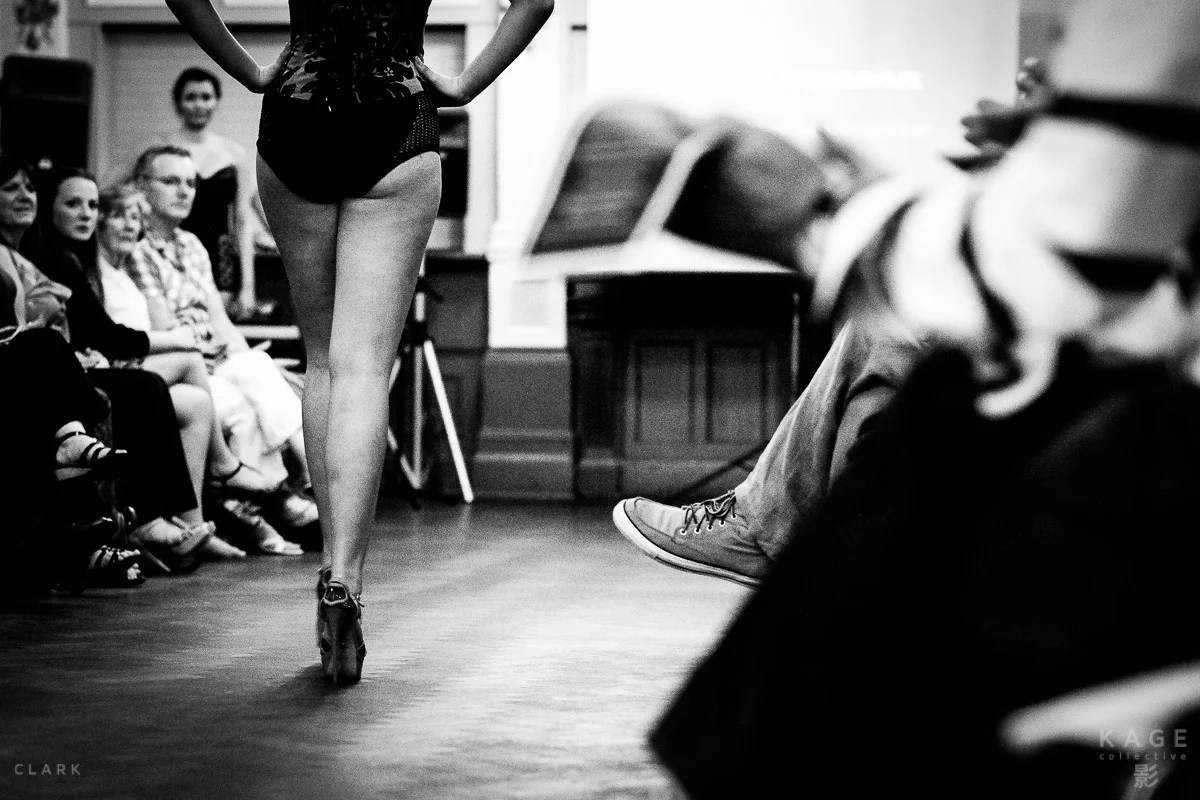
I also moved out to the front of house to shoot some of the catwalk, but to be honest, my heart was backstage amongst all the hustle and bustle, the panic and safetypins and anticipation. The atmosphere in the corridor where the models stood in line, waiting for their cue to pull back the curtain and strut out into the lights was electric. It was fairly dark, but there was a shaft of light coming from another room and each girl had to walk through it to get to the catwalk, almost as though they were having the final touch applied as they moved through the beam. A bit of glow. A bit of power. 

A few words about the picture above because it always manages to raise a smile. The girl was helping put the finishing touches to the guys' clothes and one of them asked her what was on her finger: she said that she had got a tattoo while on holiday. When they asked her what it was, she just raised a finger under her nose to reveal a moustache tattoo. I grabbed two shots in quick succession. This is the second one, and although both were ok, it was this that seemed to show the humour best. The moment was over in a flash—they always are—but I was happy to have captured it.

I love how documentary photography takes us on a journey, not just for the viewer, but also the photographer. We need to have our eyes and ears open at all times, ready to pluck the slightest thing out of the air that could possibly be a story. I'm constantly scanning everything to see if it could result in a documentary shoot. I could have looked at this with my business head on and dismissed it because there wasn't a budget for photography, but I looked at it in the longer term and it paid off.

My aim with this story was to show the hectic backstage pressure cooker of a fashion show. There is no room for modesty and there is no time to be self conscious. Everybody needs to pull together or the event won't work. I hope this won't be the last time I shoot behind the scenes at a fashion event, as I feel I have just scratched the surface. I have an idea how I can move this into another phase, but I need to do some research first. Stay tuned.

Fashion Consciousness

TEXT AND PHOTOGRAPHY BY DEREK CLARK

There is only seconds to go until catwalk time, but corsets need laced, shoes are being buckled and a safety pin is being strategically placed on the front of a dress to ensure all eyes are on the clothes and not exposed body parts. 

It's chaos backstage, but as the curtain opens and the lights kick-in, one by one each model struts gazelle like down the catwalk. They hit their mark at the end of the runway, give it some attitude then turn to make the final walk before exiting.

Life

Text & photography by Kevin Mullins

As a photographer we are the visual storyteller, we are, in essence a witness. A “curator of memories”, I like to tell my clients.

On a daily basis we photograph the seemingly mundane, the seemingly sad and the seemingly happy. We photograph every day events and we are making memories, forever, of the world unravelling its rich little tapestry.

Occasionally, this role leads us down a path full of unexpectedly tender twists and turns. One of, perhaps, the most natural events to occur, childbirth, is often fêted, often talked about but rarely captured.

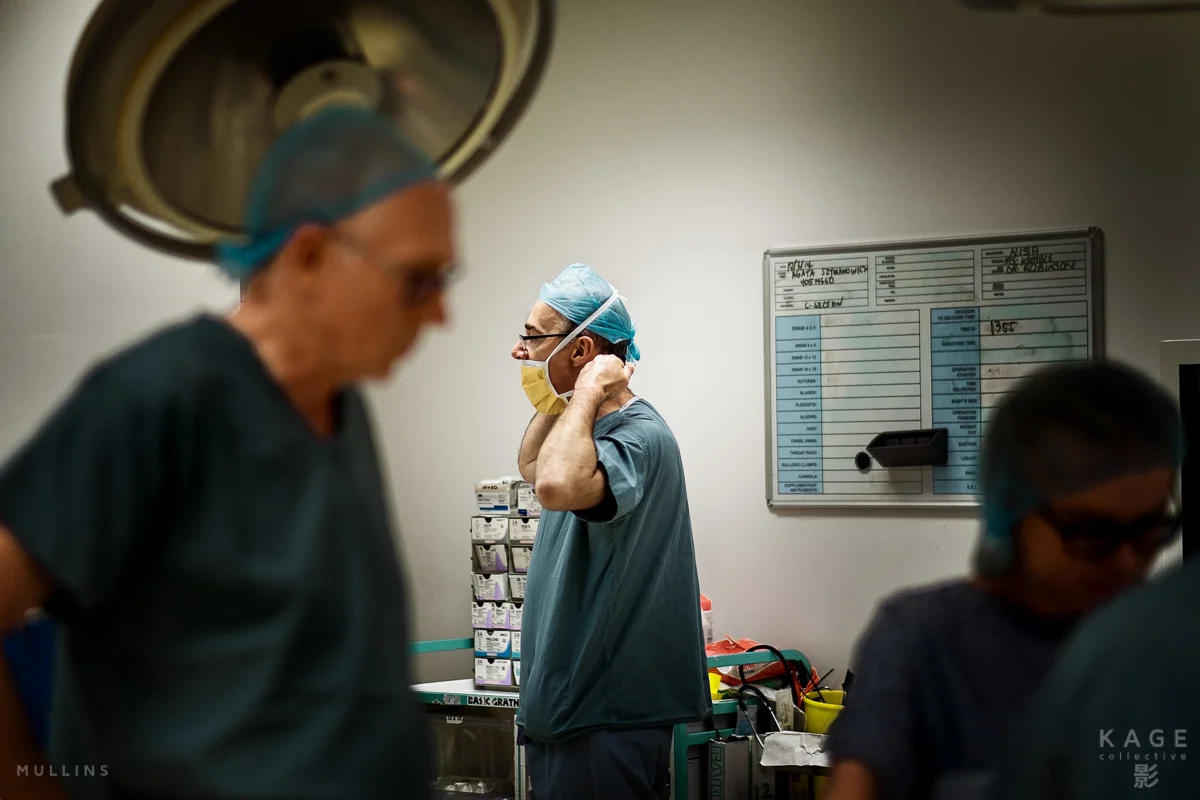
I spent seven hours in the presence of strangers, photographing the planned caesarean birth of their daughter. 

Many will think this is a voyeurism too far, but remember we are the “curators of memories”. 

This, right here, is the dawn of memory. 
In fact this, right here, is life.

Process & Incubation

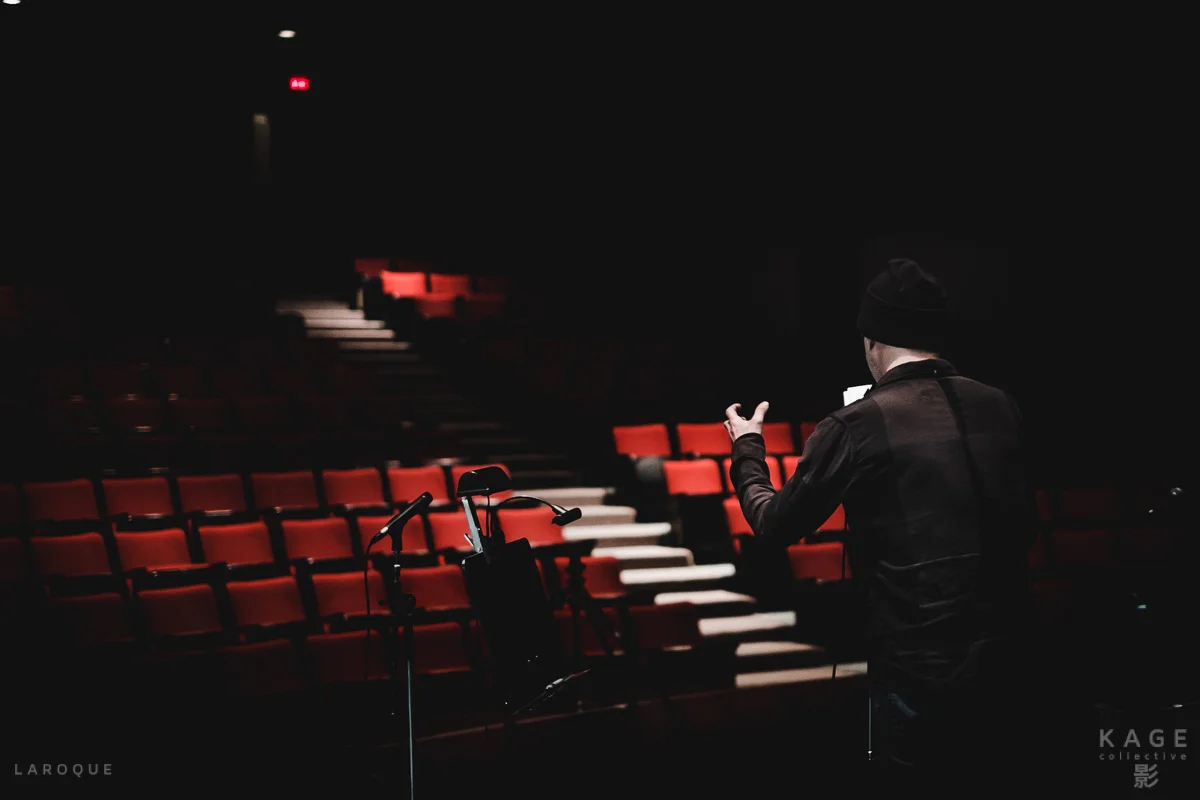
Text and Photography Patrick La Roque

Words hold powerful magic. Scribbled on a torn sheet of paper, yelled or whispered, proclaimed into the vastness of a concert hall or howled into a sweat stained pillow, lost to screams no one will ever hear... They can be pure and soft, or hard — yielding nonsense or the unavoidable truth.

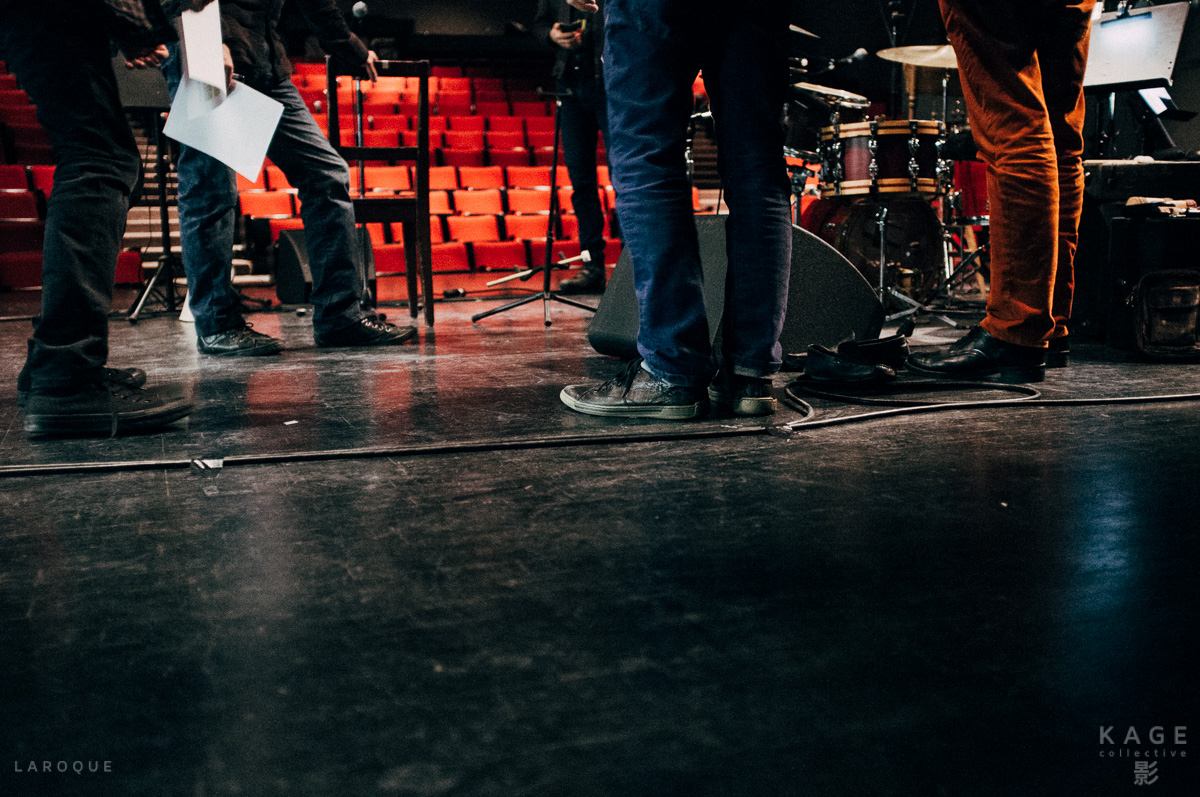
For three days I watch quietly as this object evolves. Three days of incubation, from concept, to form...
From silence to a dark celebration of music and words.

L'Art et la matière

Text and photography by Vincent Baldensperger

Ici parlent les éléments. Ici se marient l'Art et la Matière, la lissière et le coutelier-forgeron. Chacun s'exprime avec passion, précision et intensité, les gestes sont précieux, délicats, attentifs mais aussi techniques et maitrisés. Quand l'Art de la tapisserie d'Aubusson rencontre celui de la coutellerie traditionnelle cela donne naissance à d'étonnantes créations.

Les contrastes existent, de la quiétude du métier à tisser aux fureurs et aux flammes de la forge du coutelier, à l'image de la nature qui les entoure, de ce coin de campagne perdu et cerné par des forêts denses où le soleil déchire les sous bois à coups de lames aveuglantes.

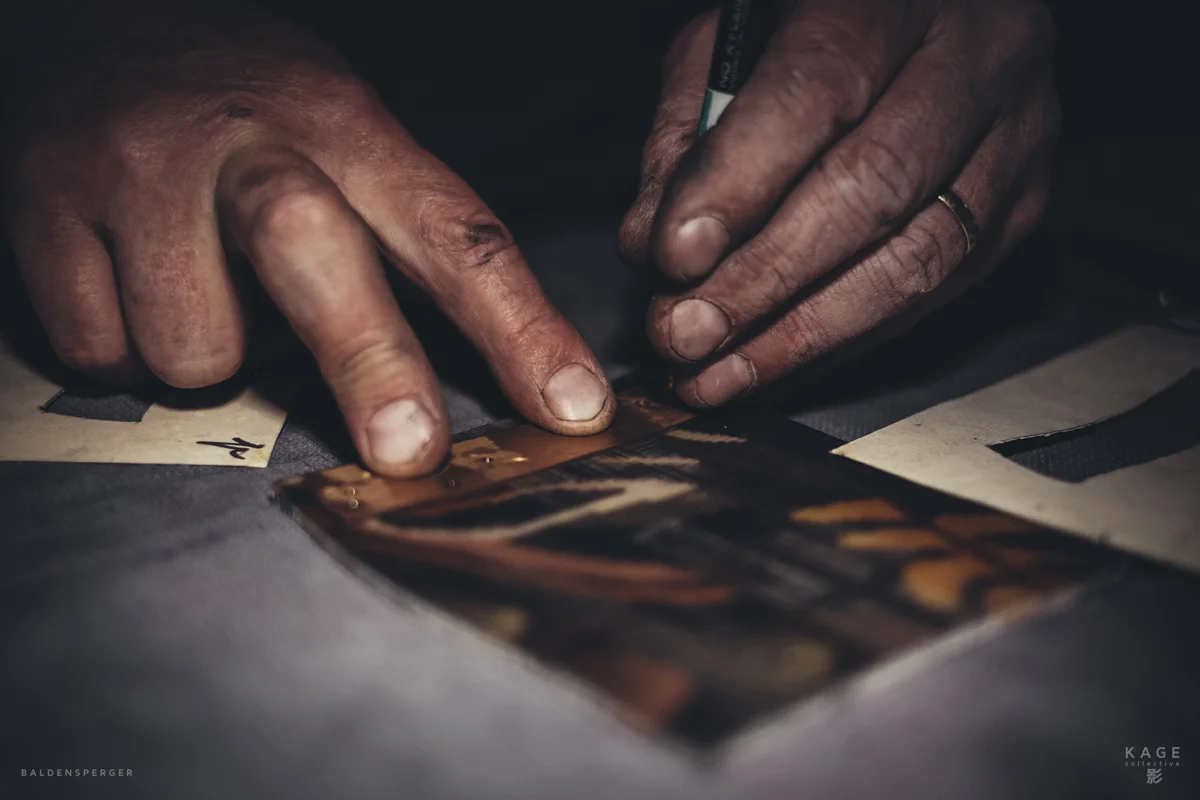
Entourée de dizaines de pelotes colorées, Marie-Armelle maitrise son ouvrage avec calme, patience et minutie, reprenant ces mêmes gestes, ce savoir-faire vieux de plus de six siècles inscrit au patrimoine de l'Unesco. Chaque nouvelle pièce de tapisserie d'Aubusson est destinée à orner plusieurs manches de couteaux.

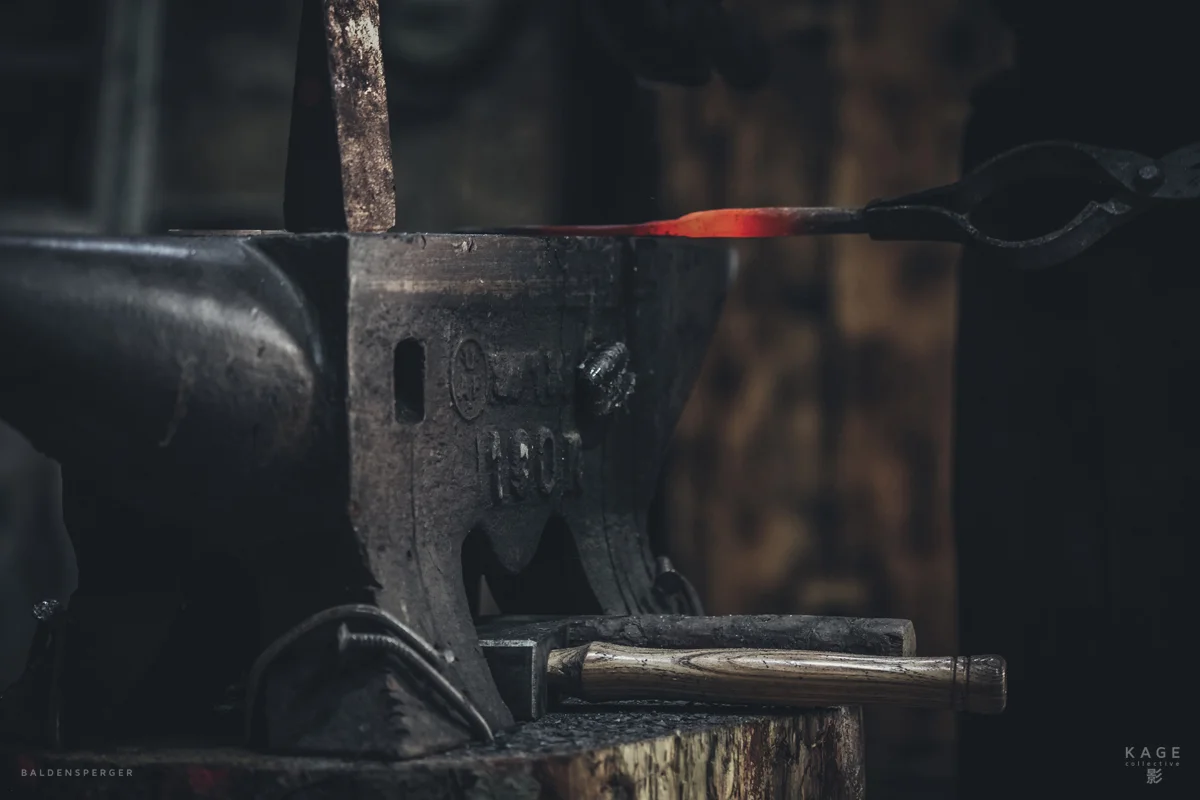
De la petite pièce où elle travaille, on entend clairement les claquements métalliques du marteau sur l'enclume, le vieux soufflet de la forge réveillant les ardeurs du métal… Ici David dompte les éléments, se joue des extrêmes, des heures passées à marteler ses lames, découper, poncer, aiguiser, lustrer puis finaliser ses montages en orfèvre…

Sans fioritures, j'aimerais vous inviter à passer quelques heures et pourquoi pas plusieurs jours ici, au cœur de la Creuse. Respirer, sentir, observer, écouter, vous proposer de découvrir l'authenticité de deux artisans, de deux savoir-faire uniques alliant tradition et modernité.
(english translation follows)

Translation:
Here the elements speak. Art and Matter combined — fiber artist and silversmith. Each one speaking in a voice of passion, precision and intensity; their gestures delicate, precious, attentive and rooted in technical mastery. When the Art of Aubusson tapestry  encounters traditional cutlery… The resulting creations are nothing less than astonishing.

This is a world of contrasts, from the soft and quiet whispers of the loom to the fiery depths of the forge. It echoes the surrounding countryside and its dense forests where the sun can rip through the undergrowth in one sharp, blinding fury.

Surrounded by tens of coloured balls of twine, Marie-Armelle works patiently, repeating century-old gestures recognized as part of the UNESCO World Heritage. Each and every new piece of Aubusson tapestry destined to grace a knife.

From the small room where she toils you can hear the clanging of the hammer falling on the anvil, the old bellows awakening the soul locked inside the metal… This is where David conquers the elements, hours upon hours spent hammering the blades, cutting, sharpening, sanding, polishing…

I’d like to invite you here, to spend a few hours or a few days in the heart of La Creuse. To breathe, to smell, to observe and listen. To discover the authenticity of two artisans, two unique savoir-faire's — borne of tradition and modernity.

On Visual Truth

By Patrick La Roque

Ok, first things first: I doubt the following article is going to be a game changer for anyone. I’m well aware of this. Most of us already know how thin the line between objective and subjective can be — we perform a balancing act every time we pick up the camera. And I certainly don’t intend this as a diatribe or a call to arms. Take it as a stream of consciousness on a subject that’s haunted me for years; more so since we began the Kage project.

You see, I don’t believe in truth. At least, not in the quasi-mythical sense that photojournalism claims to uphold. And please believe me when I say this is absolutely not a diss against what I consider one of the most courageous and important professions there is… I simply don’t believe in one, empirically objective reality that negates all others. I believe in point of view and opinion, in tens of decisions tainted by culture and experience. I believe that no matter how hard we try, we can only exist within an entirely subjective set of values that always, always impacts our images. It can be a small thing or it can sway an entire story; but it’s present at every turn. Because no matter how well intentioned we are , we’re always acting on an ulterior motive: we’re hunting for the shot. It’s the fire that fuels our lives and the very impulse that has yielded some of the most important images in history. None of us are pure — at our core we’re all self-motivated and reaching for that brass ring. 

In my mind, this can be embraced — as long as honesty and respect remain at the core of our work.

Ground Truth

The advent of digital photography has brought an increased focus on the perceived threat of image manipulation — post-processing manipulation. But I think the more insidious act of doctoring is the one that occurs before clicking the shutter.

About two years ago I saw a show on TV about documentary photographers on assignment and it stuck with me. I won’t name the publication behind it but needless to say… Big. Huge. In this one episode a photographer was shooting a job on a native tribe’s customs (I forget where or whom exactly… Sorry, it’s been awhile) and he apparently had a problem with the time of day at which they were planning to perform a specific ritual: the light wouldn’t be right. Hey… we all love the golden hour. So he asked the chief and spiritual leaders to move the ceremony. They were angry, they didn’t want to do it… But in the end they agreed, against their will, grudgingly. The fact that most of the show was devoted to resolving this “problem” attested to this being perfectly normal, acceptable behaviour — the stuff-you-need-to-deal-with in the field.

Really? For me this was an alteration of physical reality to trump all the cloning and desaturation in the world. A negation of facts in total disregard of the subject. Events must drive images... Not the other way around.

One truth 

We’re tamperers. The very act of focusing our gaze towards a single point in space, discarding elements outside our field of view in favour of specifics, is a profoundly subjective decision. We’re constantly playing with context in any scene we shoot. Within fractions of a second we can capture the same face either sullen or gleeful — and yet the one we keep, the one we present to the world, will define that moment’s entire emotion and become its own micro reality.

So in my mind, what remains as the one truth possible, the only baseline we all share… Is non-interference. Being a witness at all costs. It sounds simple and obvious but historically, it’s probably been the invisible hand shaping our perceptions. We can’t help being who we are and interpreting a scene within our own cultural boundaries, but we can force ourselves into never directing events as they unfold. Events must be immutable. 

If we stay true to this, I believe we can own our point of view and stop pretending to be these distant, perfectly objective creatures. And if photojournalism as we know it is dead, killed by a million citizen-journalists tapping away at their smartphone screens, maybe it’s time to enter an era of photo-editorialists, without shame. When news organizations are turning to crowd sourcing for most of their content, when cameras are everywhere at all times, recording events as they happen, maybe the photographer’s job has to shift to remain relevant. 

Perhaps what we need now are poets, able to express the greater reality of our world outside the confines of traditional rules, towards a new visual truth aware of both its failings and power. 

Same as the old truth but unencumbered — and always, profoundly respectful.

In Praise of Variety

In Praise of Variety

Okay, look: I get bored easily. I like to find new challenges, new ways of seeing the world.

I’ve talked before on my own blog about the Fuji TX / Hasselblad X-Pan film cameras, that put a super-wide double-35mm panoramic frame into a rangefinder body, which was a pretty amazing thing to behold.  What was great about discovering it for me was simply that I had to figure out how to make that frame WORK...

The Value of a Personal Project

By Derek Clark

Personal projects are nothing new, they've been around since the dawn of photography. But a lot of photographers don't do them and are missing out on the chance to do their best work and advance their craft in ways that might not be possible in a commercial context. There are many great photographers that didn't achieve recognition with their paid work, but suddenly shone through because they shot something from the heart, the way they wanted to and not what they thought a client might want.

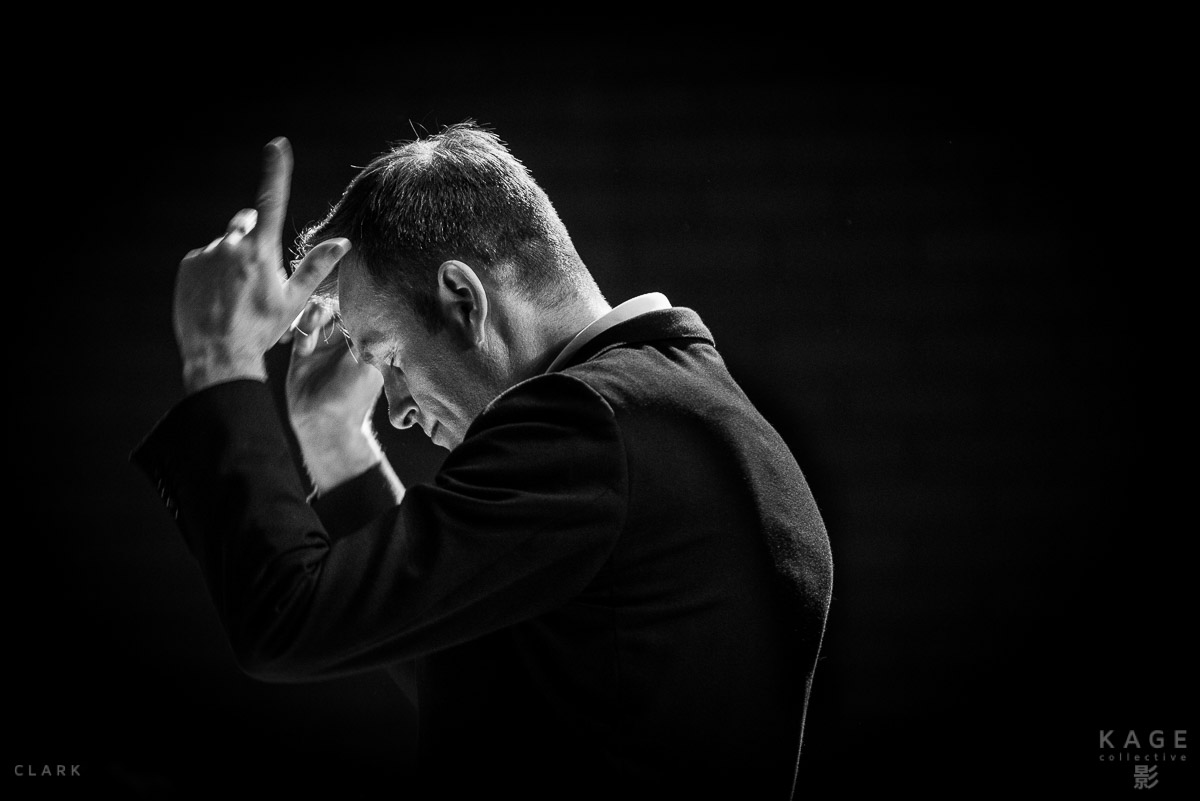
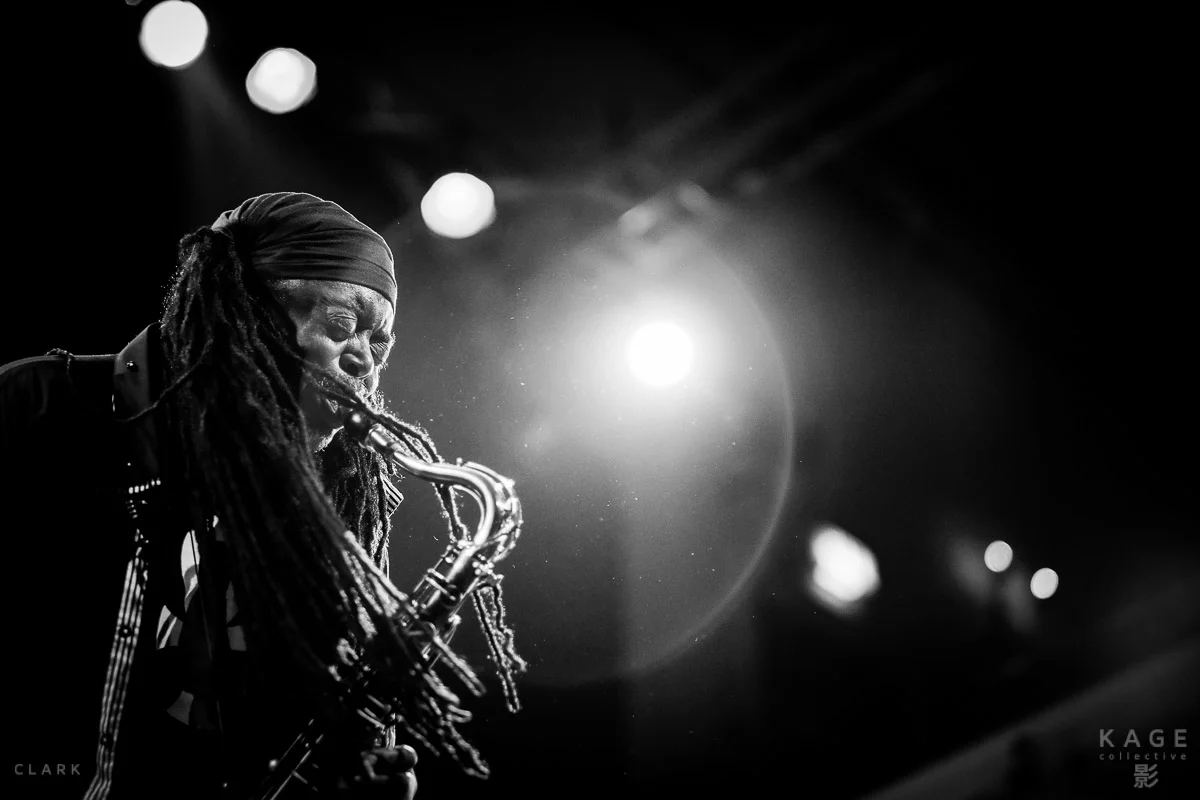
I started Project Jazz because of my love of the music and the classic black and white photographs of the BlueNote era from great photographers like Herman Leonard, William Claxton, Lee Tanner and many more. All it took to get my project started was an email to Tommy Smith, the leader of The Scottish National Jazz Orchestra. I explained to Tommy what I wanted to do and what my reasons were and he agreed to me going along on a gig. Tommy liked my work and I didn't get in the way. I'm a musician, so I know how I need to conduct myself in situations such as recording sessions, rehearsals and gigs. This has not only developed into a long term project, but has also provided paid work, something that personal projects often do. I’ve provided answers to some common questions about personal projects below which I hope are useful to anyone that wants to get started. The main thing is to start now. You can always change directions later if you need to.

What should my personal project be about?

The subject you choose is very important as it will need to be something that interests you enough to hold your attention over a long period of time. It has to be a a subject that draws you back again and again, but is different enough each time — not just repeating shots you have already captured. If you have a passion for something (other than photography), it might be that you have the perfect subject for a long term project. Project Jazz was an easy one for me because I play saxophone, love jazz and love all the black and white photographs of the great players, like John Coltrane, Miles Davis, Herbie Hancock, Dexter Gordon...etc. I'm now producing black and white photographs that I'd be happy to see in any of the jazz books I own. I think the work I'm doing now is as important for the musicians today as it was to document the greats of yesteryear. This is what keeps me going back. A documentary photographer has a duty to document and hopefully feels the urge to do so on a daily basis.

How long should it run?

Question: How long is a piece of string?

Answer: As long as it needs to be!

Same goes for personal projects. The project will usually determine the length of time it will take. It could be a subject with limited variety, a short window of time that might take a day or two, or even a week or two. But it could be something that will take a lifetime and may never be finished. The big question should be this: does my chosen subject have enough interest for me to keep going and see it through? If the answer is no, you will need to think of something else.

What should I do with the work I produce from my personal project?

Don't just keep it to yourself or leave it sitting on a hard drive. There are many ways to share your personal projects these days, including blogs, magazines, books. It's a good idea to have an end goal in mind. You might be happy just to start a blog and share your project images as you go along. Maybe you have a subject that would lend itself to a book some day. Even if it's not something a publisher would be interested in, it's a great feeling to hold a book in your hands containing your own photographs. There are many self publishing options out there — Blurb being one of the most popular. There are also many specialist magazines on the shelfs that are desperate for content. Would your project make a good feature for them? It only takes an email to the editor and it could help fund part of your project.

What now?

Start right now! Get a notepad and pen or an app like Evernote and start writing down possible subjects for your personal project. What do you have a passion for? What do you have access to in your life that would make a good documentary essay? Write a list and then write plus's and minus's for each subject and see which one keeps pushing its way to the surface. Be open to the idea and the subject will present itself to you... But do it now! 

Documenting ourselves on a regular basis and in a variety of ways is an essential long term project IMO.

Documenting ourselves on a regular basis and in a variety of ways is an essential long term project IMO.

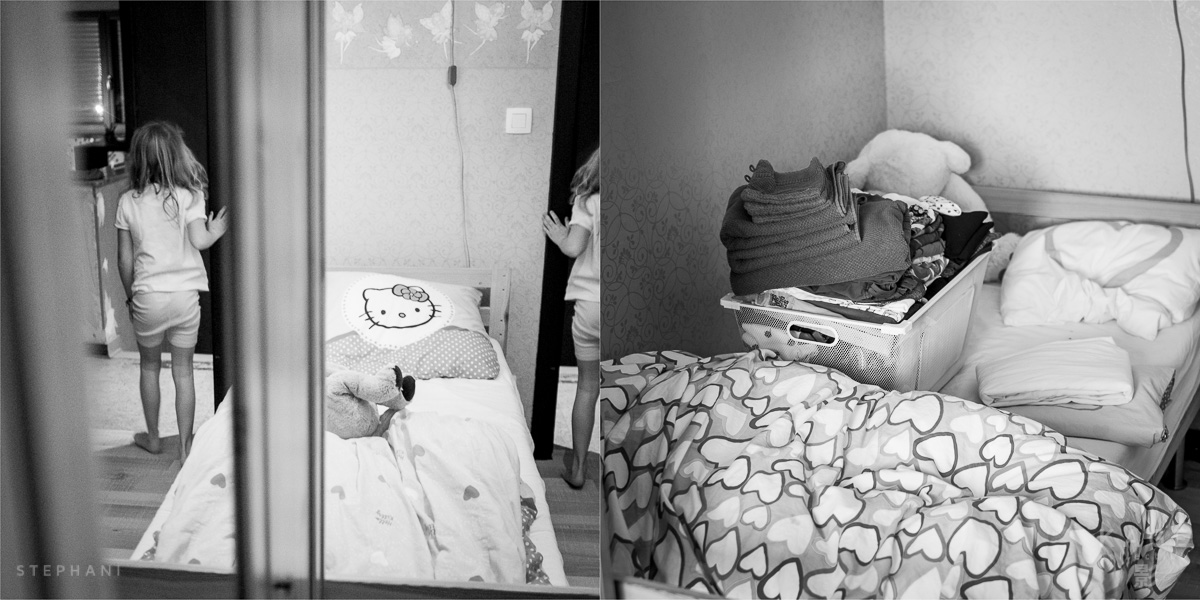
Week / Week

Text & photography by Bert Stephani

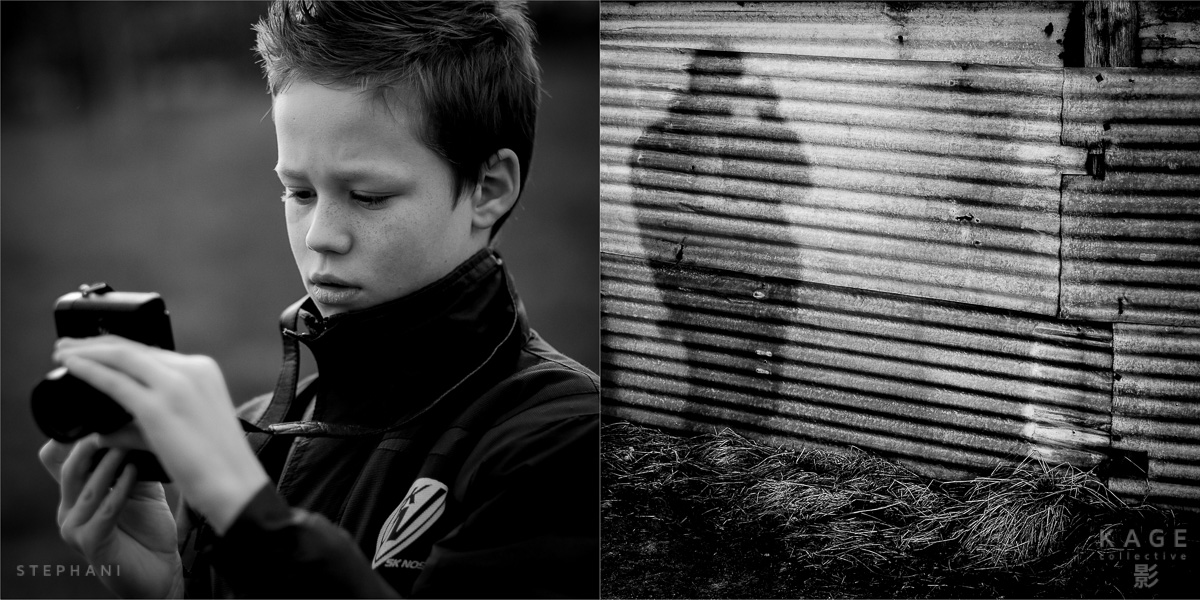
I’m a father … Every other week.
My divorced friends said I would get used to it. But after four years I still don’t and probably never will. I always wanted kids, but I never wanted two lives. 

I know I’m very lucky compared to many other divorced moms and dads: the relationship with my ex-wife is pretty good, I get to see the kids regularly after school on my weeks off and I've fallen in love with a woman who accepted that I came as part of a package deal. 

I’ve learned to live with the week/week thing. It makes managing my work and travel schedule easier. But I’ll never get used to the deafening silence that descends upon our house ... every other Friday night.